
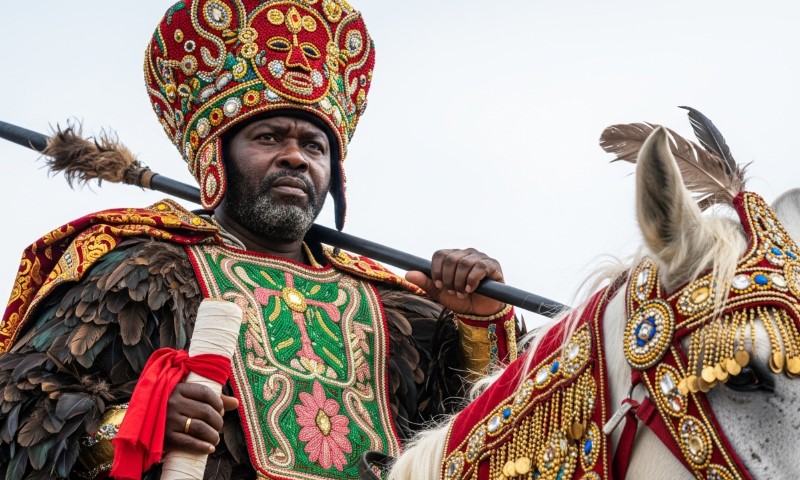
Across West Africa, power was never organized in one uniform way. Some societies built large, centralized kingdoms with kings, councils, tribute systems, and layered administration.
Others relied on village assemblies, lineage elders, age grades, title holders, or religious authorities. Taken together, West African political life before colonial conquest shows a region full of institutional variety, civic order, and political thought, not a blank space waiting for outside rule.
A closer look at traditional governance helps explain how authority worked, how disputes were settled, how land and trade were managed, and why many customary institutions still carry weight in parts of Ghana, Nigeria, and beyond.
It also helps correct an old colonial habit of treating African political systems as either simple or interchangeable. West Africa had monarchies, federations, emirates, and village republics, often existing side by side.
What Matters Most
- West Africa had many governance models, not one.
- Kings often ruled with councils, checks, and limits.
- Some societies governed through assemblies, elders, and consensus.
- Many traditional institutions still influence public life today.
Why Governance Looked Different Across West Africa
Geography, trade routes, religion, kinship, war, and migration all shaped political institutions in West Africa. Forest kingdoms did not always govern like savanna empires.
Muslim commercial centers often developed written bureaucratic traditions tied to Islamic law, while other societies placed greater emphasis on oral constitutional norms, councils of elders, and ritual legitimacy.
None of that meant one system was more advanced than another. It meant political organization matched local needs and historical pressures.
One broad pattern does help as a starting point: some societies were highly centralized, while others were more diffuse and corporate in structure. In centralized systems, a king, emir, or paramount ruler stood at the top of a recognized hierarchy.
In less centralized systems, public authority was distributed across lineages, elders, age sets, titled associations, or village assemblies. Both models had rules, limits, and recognized procedures.
A Quick Comparison Of Major Governance Models
Table summary based on comparative historical work and regional case studies.
Centralized Kingdoms And Layered Authority
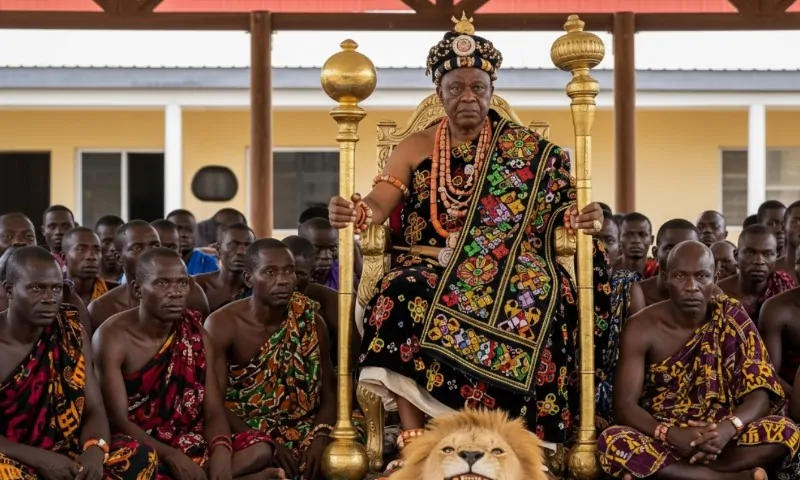
Many readers first picture precolonial Africa through large kingdoms, and West Africa had several of them.
Yet kings rarely ruled alone. Strong monarchies depended on councils, office holders, provincial chiefs, military leaders, priests, and tribute networks. Royal power usually rested on negotiation as much as command.
The Asante Example
The Asante Empire, centered in present-day Ghana, is one of the clearest examples of a sophisticated centralized system.
Under Osei Tutu and Okomfo Anokye in the late 17th century, a number of Akan polities were brought into a more durable union with Kumasi at the center.
The Golden Stool served as a sacred symbol of collective sovereignty, linking authority to the nation rather than to one ruler’s private will. State councils, military organization, and a hierarchy of chiefs helped turn the alliance into an empire.
Asante governance worked through layers. The Asantehene stood at the top, but subordinate chiefs retained recognized authority in their own areas.
Among Akan societies more broadly, queen mothers also played an important political role, especially in matters of succession, counsel, and legitimacy.
Academic work on Akan governance has long pointed to public deliberation and the importance of balancing offices rather than concentrating every function in one pair of hands.
A useful point often missed in quick summaries: Asante was imperial, but not mechanically centralized in every corner. It held conquered and allied territories together through hierarchy, diplomacy, tribute, and military pressure. Such a model required constant political maintenance.
The Oyo Empire And Checks On Royal Power
Among the Yoruba, the Oyo Empire offers another strong example of organized kingship with institutional restraints. The Alaafin of Oyo was a major ruler, yet he did not exercise unlimited authority.
Historical work on Oyo repeatedly highlights the Oyo Mesi, a council of leading chiefs who acted as kingmakers and as a check on the ruler’s conduct. A head chief, often identified as the Bashorun, carried major political influence.
Oyo also drew strength from military organization, long-distance trade, and provincial administration. Cavalry gave the empire real reach across the savanna zone, while commercial exchange linked Oyo to both northern and southern markets. Still, institutional balance mattered.
A ruler who ignored accepted political norms could face resistance from elite bodies with recognized constitutional standing in Yoruba political culture. Authority, in other words, came with guardrails.
Emirates, Islamic Authority, And Administrative Order
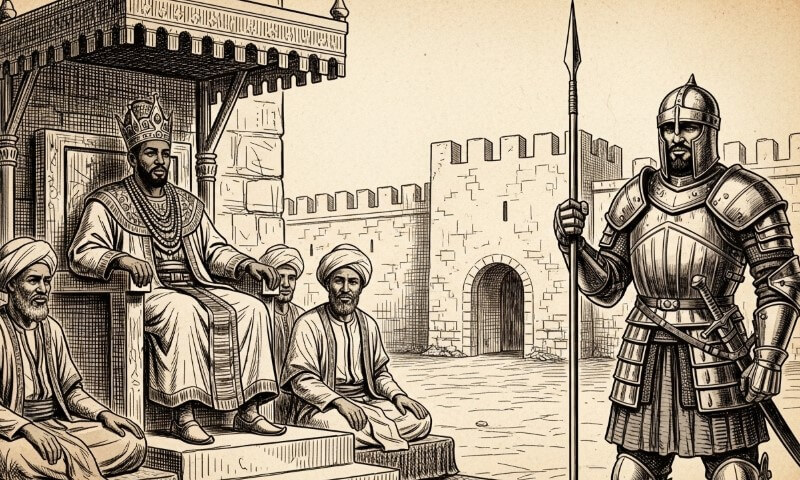
Islamic political institutions shaped large parts of West Africa, especially in the Sahel and the northern savanna.
Hausa city-states had long histories before the 19th century, but the jihad led by Usman dan Fodio transformed much of the region by creating the Sokoto Caliphate. Under that order, emirs governed local territories while acknowledging the wider authority of the caliph.
Each emirate possessed a degree of autonomy, yet disputes and obligations could be referred upward to Sokoto. Islamic scholarship mattered, judges and clerics held real influence, and written legal traditions played a larger role than in many neighboring systems that depended mainly on oral precedent.
Britannica’s history of Nigeria notes that emirates pledged loyalty to the amir al-mu’minin and contributed to Sokoto, while officials moved across the system to oversee affairs and settle disputes.
For ordinary subjects, governance in such emirates was not abstract. It touched taxation, justice, market regulation, war, land questions, and local administration. Muslim reform movements did not erase older African political practices altogether, but they did reorganize power around a more explicit religious-political framework.
Village Republics And Shared Governance
One of the most important corrections in African history is simple: absence of a king did not mean absence of government. Many Igbo communities, especially in southeastern Nigeria, organized political life without a centralized monarch.
Historians often describe many of such systems as acephalous, segmentary, or republican, though each term has limits. What matters more is how power actually worked. Authority often rested in councils of elders, assemblies of adult males, lineage heads, age grades, title societies, and ritual specialists.
In practical terms, public decisions could emerge through debate and consensus rather than command from a palace. Age grades handled communal labor and social discipline. Titled associations could shape prestige and influence.
Elders interpreted custom and mediated conflict. Some communities had stronger ritual authorities than others, and a few Igbo polities, such as Onitsha, developed monarchic features, which is one reason scholars stress diversity within Igboland rather than one rigid template.
Colonial administrators often struggled with such systems because they preferred a clearly identifiable chief who could be used as an intermediary. In parts of Igboland, British officials responded by creating “warrant chiefs,” a move that sat awkwardly with local political culture and produced serious tension.
That later colonial episode says a great deal about how well-structured many village republics already were. Outsiders misread distributed authority as disorder. Local communities did not.
Councils, Elders, And The Logic Of Restraint
Across very different societies, one recurring feature stands out: rulers were often constrained by institutions around them. Councils of chiefs, elders, lineage heads, queen mothers, military officials, and religious figures could all limit unilateral action.
In many cases, legitimacy depended on consultation. Even strong kings ruled within known norms, and succession often required approval from recognized power holders.
Such restraint did not make every system democratic in a modern electoral sense. Women, dependents, slaves, or strangers were not equally empowered across all societies. Yet it would be wrong to treat precolonial governance as raw despotism.
Public deliberation, moral expectation, and institutional counterweights had real force. Akan political thought, for example, has often been discussed by philosophers and political theorists as a form of consensus-oriented governance with meaningful public voice, even though status and hierarchy remained central.
How Governance Connected To Land, Justice, And Trade
Political institutions in West Africa were tied closely to everyday life. Chiefs or elders could oversee land allocation. Councils handled inheritance and family disputes. Market authorities regulated exchange.
In centralized states, tribute helped sustain courts and armies. In more decentralized communities, labor obligations and kinship duties helped maintain roads, farmland, shrines, and local security.
Trade mattered especially because West Africa was deeply connected long before colonial conquest. Gold, kola, horses, leather goods, salt, textiles, and later Atlantic commerce all affected how rulers built power. Oyo drew advantage from exchange between northern and southern zones.
Akan states expanded through control of trade routes and gold-producing regions. Hausa cities linked commerce, scholarship, and political authority across the Sahel. Governance grew in conversation with markets, not apart from them.
Colonial Rule Changed The Ground Rules
European conquest did not meet a political vacuum. It met functioning African institutions. UNESCO’s General History of Africa and later scholarship both stress that colonial states often reshaped older systems rather than building administration from nothing.
In some places, colonial authorities ruled through chiefs and emirs. In others, they invented or exaggerated chiefly authority where local politics had worked through councils, lineages, or assemblies.
Indirect rule in Northern Nigeria leaned heavily on existing emirate structures, which made centralized Muslim polities easier for colonial officials to use. In southeastern Nigeria, where no comparable centralized chain of command existed in many areas, colonial improvisation produced distortions and resistance.
West African political history during colonial rule therefore cannot be told as a clean break. Older institutions survived, adapted, or were bent into new forms depending on local conditions and colonial strategy.
Why Traditional Governance Still Matters
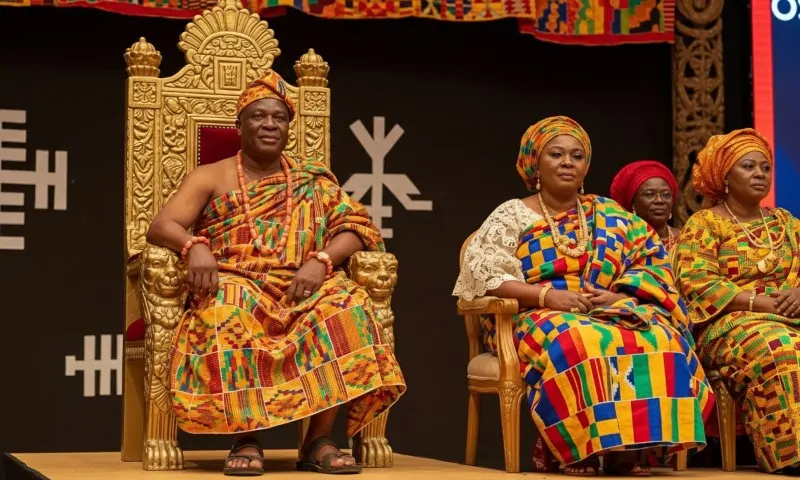
Traditional governance is not only a historical subject. In Ghana, the institution of chieftaincy remains constitutionally guaranteed, and the legal framework still recognizes traditional councils and Houses of Chiefs.
That modern legal recognition shows how older institutions continue to matter in questions of customary law, land, identity, mediation, and local legitimacy.
Nigeria offers a different but related picture. Traditional rulers play visible roles in community leadership, dispute mediation, and local legitimacy, even though their constitutional status has long been more limited and politically debated.
Policy discussions in recent years continue to revisit whether and how traditional institutions should be more formally integrated into governance and security structures.
No serious reading of West African politics can ignore such institutions. Chiefs, emirs, queen mothers, and customary councils carry historical memory, symbolic authority, and practical influence that modern state structures have never fully replaced.
Common Misreadings To Avoid
A few mistakes appear again and again in casual discussions of African governance:
- Treating all precolonial African politics as monarchy.
- Assuming stateless meant lawless.
- Imagining kings ruled without checks.
- Reducing political authority to one ethnic stereotype.
- Treating colonial administrative maps as older political reality.
Historical record does not support any of those shortcuts. West Africa housed political systems that were centralized, distributed, hereditary, elective in part, sacred, commercial, military, consultative, and adaptive, sometimes all within the same broad region.
Summary
Traditional West African governance was varied, structured, and deeply rooted in local history. Asante councils, Oyo checks on royal authority, Sokoto’s emirate order, and Igbo village republicanism each show a different answer to the same political question: who should rule, by what right, and under what limits.
Looking closely at such systems makes one point hard to miss. West Africa had long-developed political institutions of its own, and many still shape public life in the present.