
Zangbeto represents one of the most visually arresting and spiritually charged expressions of Vodun culture in Benin. Known widely as guardians of the night, these masquerades carry responsibilities that extend into protection, moral regulation, and spiritual mediation.
Layers of secrecy, ritual discipline, and communal belief shape a tradition that operates simultaneously as sacred practice and public spectacle.
Decoding Zangbeto requires attention to history, symbolism, and lived religious experience.
Let’s take a look at Zangbeto Masquerades and what it really means for the locals.
Origins and Historical Background
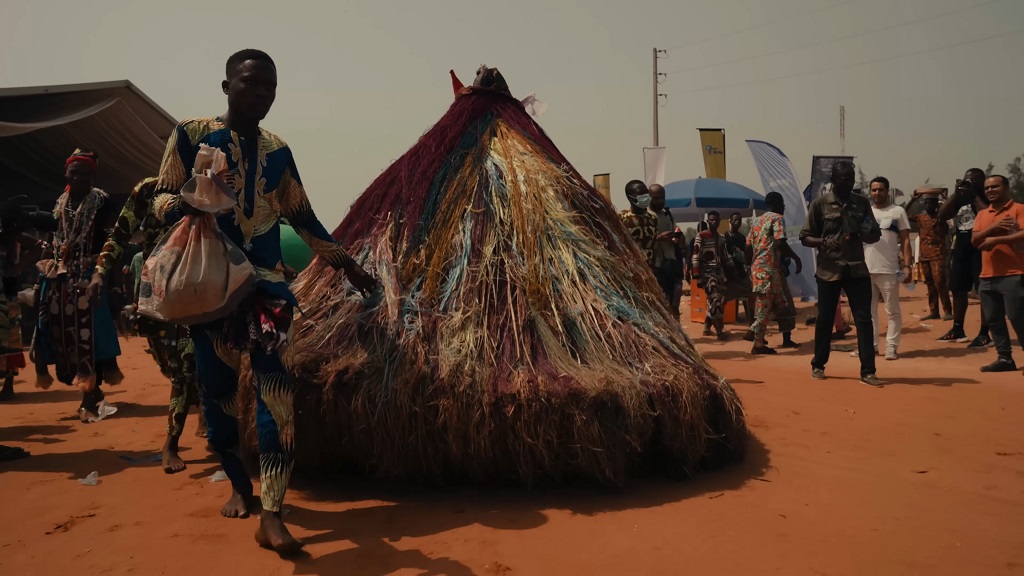
Zangbeto draws its name from the Gun language, also known as Ogu, where zan signals night and gbeto signals man. Language places the masquerade within darkness, vigilance, and unseen motion, framing night as a space of both danger and protection.
Cultural grounding developed among the Ogu people, later shared and reshaped by Fon and Aja communities across Benin, Togo, and southwestern Nigeria. Transmission occurred through ritual practice, oral instruction, and initiation rather than written record.
Several origin stories circulate within coastal and inland communities, each reinforcing fear, protection, and deception as tools of survival.
One account describes a warrior escaping enemies by hiding inside a raffia-covered frame, using sound and sudden movement to create terror.
Another narrative situates Zangbeto as a coastal defense system organized to resist invaders and enforce order. Oral memory connects these stories to concrete social roles that shaped daily life.
Historical practice assigned Zangbeto authority during nighttime hours, especially in settlements lacking centralized governance. Functions extended into moral enforcement and conflict resolution, making presence essential to communal stability.
Roles associated with this authority included:
- Night patrols that discouraged theft and violence
- Public punishment for violations of communal codes
- Ritual judgments carried out during festivals or emergencies
Vodun recognition as the official religion of Benin in 1990 reinforced the enduring status of such practices. Adherents trace spiritual continuity back more than 6,000 years, linking Zangbeto to ancestral systems that predate colonial rule.
The Masquerade Visuals and Symbolism
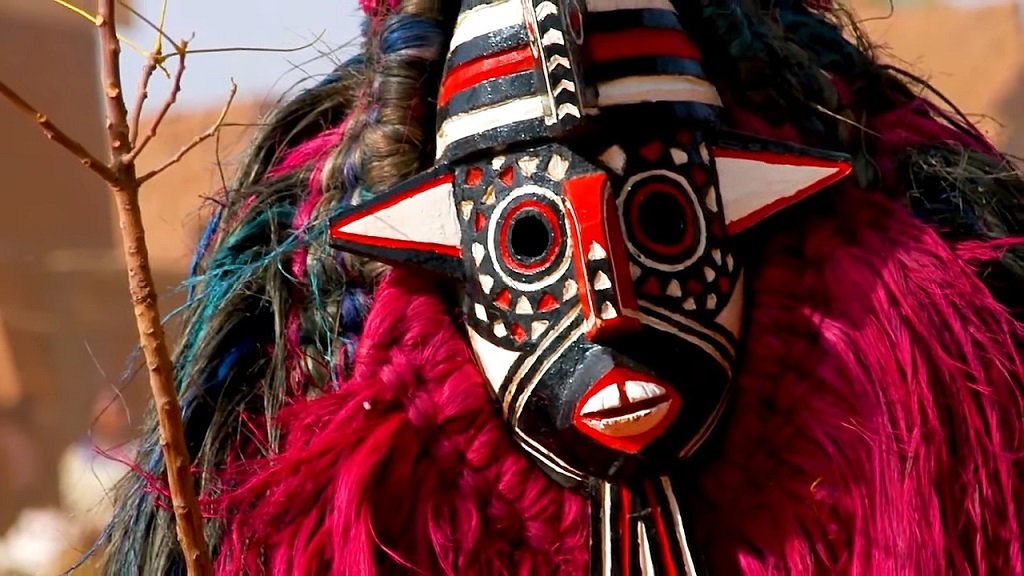
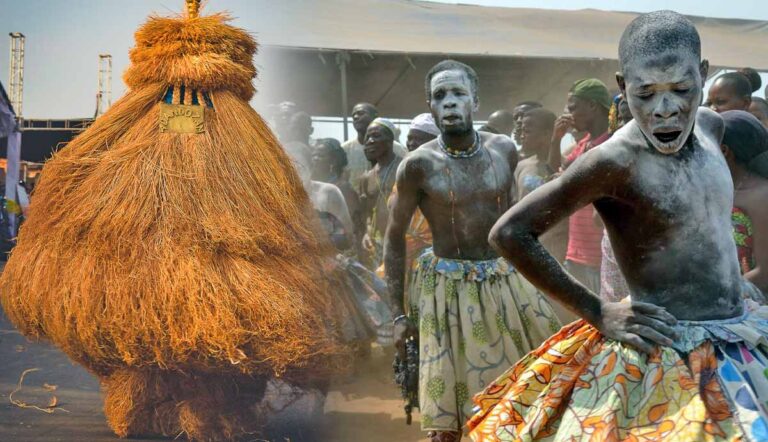
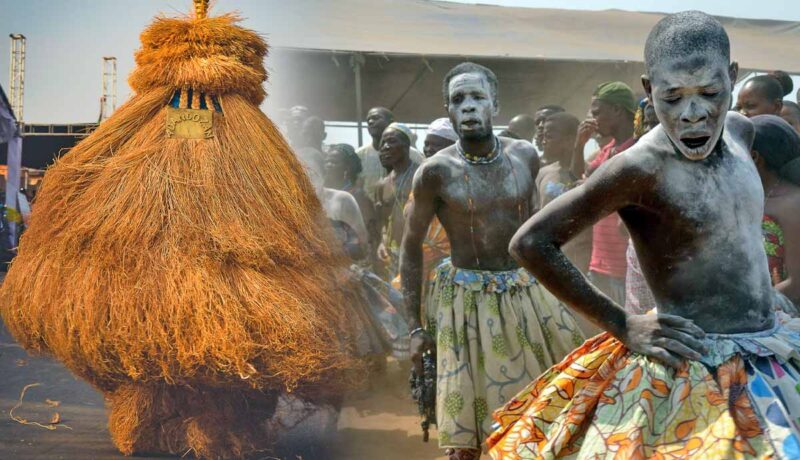
Zangbeto costumes rely on natural materials shaped into dramatic forms. Raffia, dried palm fronds, hay, and dyed fibers cover a cone-shaped wooden or bamboo structure. Design supports rapid rotation, which defines the visual impact of each appearance.
As spinning intensifies, size perception shifts, producing disorientation that unsettles observers and heightens tension.
Material choices and construction details serve ritual purpose as much as visual effect. Each element communicates watchfulness, concealment, and authority, including:
- Layered fibers that hide human presence
- Conical shape associated with spiritual ascent
- Continuous motion that prevents physical contact
Spiritual belief holds that ancestral spirits or other forces occupy the masquerade during performance. Ritual demonstrations sometimes attempt to show an empty interior, reinforcing power through contradiction and secrecy. Symbolism centers on vigilance and moral order.
Zangbeto observes communal behavior, corrects disorder, and signals consequences aligned with divine justice.
Ritual and Performance
Performance relies on sustained motion, rhythmic force, and controlled exhaustion. Spinning and whirling can continue for long periods, often leading performers into altered states recognized as possession.
Motion is believed to strengthen spiritual presence, turning physical endurance into ritual proof.
Each appearance unfolds within a carefully prepared ritual environment. Drumming, chanting, prayer, and offerings surround the masquerade, drawing collective participation.
Preparation rituals serve multiple functions, including spiritual invitation, physical protection, and secrecy maintenance.
Certain moments intensify belief through acts regarded as supernatural. Smaller Zangbetos may appear suddenly out of a larger one, reinforcing mystery and continuity.
Believer accounts describe extraordinary demonstrations, including:
- Swallowing glass without injury
- Walking across fire or water
- Appearing inside sealed bottles
- Sudden disappearance during performance
Performers undergo possession rituals before and during public display. Initiation training focuses on discipline, secrecy, and physical control, ensuring balance between spiritual force and human limitation.
Festival Contexts
Vodun Festival celebrations held in Ouidah on January 10 hold national and spiritual importance in Benin. Annual gatherings honor Vodun deities, ancestral spirits, and Zangbeto traditions while also marking remembrance of victims of the transatlantic slave trade.
Ritual actions, drumming, chanting, and masquerade appearances transform public space into a site of collective memory. National recognition affirms Vodun as a living religion within Benin rather than a relic of the past.
The ceremonial order during the festival reflects a deep respect for hierarchy and sacred timing. Elders, priests, and initiates coordinate appearances, ensuring that Zangbeto emerges only after proper invocation.
The presence of Zangbeto during the Vodun Festival signals protection and continuity, linking present-day Benin to ancestral systems that survived displacement and colonial disruption.
Zangbeto festivals also take place throughout coastal towns and urban neighborhoods across Benin. Porto-Novo remains especially known for elaborate displays, dense participation, and strict ritual discipline.
Events follow sequences designed to reinforce authority, accountability, and communal ethics, including:
- Processions through residential areas that symbolically cleanse streets and homes
- Ceremonial judgments addressing disputes, theft, or moral violations
- Competitive dance displays are judged by elders trained in ritual codes
The organization of these events reflects the social structure within Benin, where spiritual authority and civic order remain closely connected. Timing often aligns with agricultural cycles, communal crises, or significant ancestral dates. Outsiders may observe, yet access remains regulated.
Sacred purpose governs conduct, movement, and proximity to the masquerade.
Community voices across Benin consistently reject any framing that reduces Zangbeto to spectacle alone. Ritual meaning defines when, how, and why appearances occur. Entertainment value is considered secondary to spiritual obligation, moral correction, and ancestral presence.
Myth vs. Reality
Belief systems within Benin hold that Zangbeto are not human figures but spiritual vessels assigned to cleanse and guard communities. Possession is considered genuine and expected, not symbolic.
Ritual secrecy, oral transmission, and initiation rites sustain this conviction across generations. Concealment of performer identity preserves authority and shields individuals involved.
Alternative interpretations often arise through academic study or external observation. Skeptical perspectives attribute perceived supernatural effects to disciplined choreography, costume mechanics, and physical endurance developed through training.
Scholars examining Zangbeto in Benin frequently note high levels of organization, secrecy, and communal trust required to sustain the practice.
Attempts to explain performances rarely dismiss their impact. The complexity of ritual coordination, collective belief, and inherited discipline challenges simple dismissal. Only initiated members know performer identities, a rule strictly enforced in Benin communities.
Protection of this knowledge maintains spiritual authority and ensures continuity of practice within Vodun systems tied to Benin history and identity.
Summary
Zangbeto brings together spirituality, justice, artistry, and communal identity within Vodun practice.
Sacred mystery persists through ritual action as much as belief, allowing performance and invocation to coexist.
Engagement with Zangbeto on its own cultural terms opens space for respect, continuity, and meaning grounded in lived tradition rather than external judgment.