
Pre-colonial West African kingdoms developed complex systems of governance, economy, and belief long before European contact.
Societies such as the Ashanti, Yoruba, Igbo, and Akan organized power through customs that recognized multiple sources of authority.
Reassessment of women’s roles is necessary because colonial narratives often portrayed African power as male-centered and minimized female influence.
WASSCE materials stress that authority in African societies was not solely controlled by men, as many women held recognized and respected power.
Women in pre-colonial West Africa exercised authority and influence in political, economic, religious, and social domains, using systems that often balanced or paralleled male power rather than excluding women.
Authority and Gender in Pre-Colonial West Africa
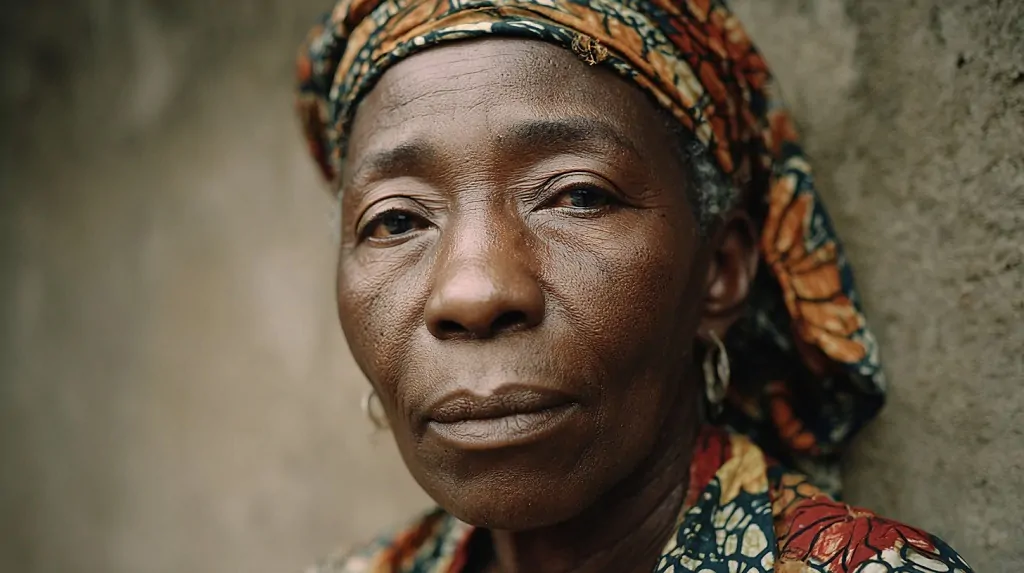
Authority in pre-colonial West Africa functioned through visible human institutions and invisible spiritual and ancestral forces. Leadership responsibilities existed within courts, councils, shrines, and kinship networks, allowing both men and women to exercise influence.
Social systems accepted power as multidimensional, connecting political control with spiritual responsibility and communal obligation.
Women occupied positions that required decision-making, ritual leadership, and social regulation, showing that authority extended across gender lines.
Gender roles in pre-colonial West Africa relied on structured balance rather than hierarchy. Dual sex systems formalized participation by men and women through parallel offices that operated simultaneously.
Governance succeeded through cooperation, ensuring no single gender monopolized power. Accepted norms promoted shared responsibility and reinforced social stability.
Key elements of gendered authority operated through clearly defined systems, including:
- Visible leadership roles held by women in courts and councils
- Spiritual authority exercised through priesthoods and ancestral mediation
- Institutional recognition of female voices in governance structures
Social order depended on collaboration, allowing women to wield authority in formal and socially sanctioned ways.
Political Roles and Authority
Political organization in pre-colonial West Africa reflected shared leadership models that integrated female authority into governance.
Women influenced leadership selection, policy direction, and conflict resolution. Power functioned as a collective responsibility rather than individual dominance.
Female Rulers and Monarchs
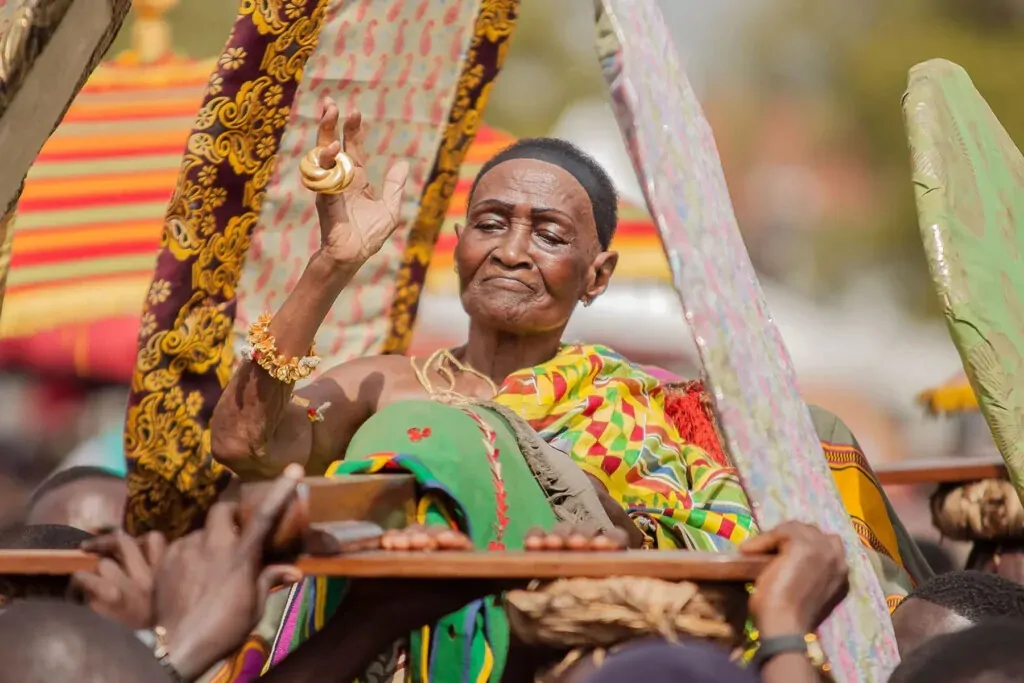
Queen Mothers played central political roles within Ashanti, Yoruba, and related societies. Authority held by Queen Mothers extended across advisory, judicial, and executive functions.
Political systems require their involvement to ensure accountability and legitimacy. Akan societies followed matrilineal succession, positioning Queen Mothers as key figures in leadership continuity.
Political influence exercised by female rulers included:
- Advising kings on governance and public morality
- Checking misuse of royal authority
- Approving or rejecting candidates for succession
Efunsetan Aniwura demonstrated how commercial success supported political power in Yoruba society.
Continental examples such as Queens Nzinga and Amanirenas support the broader African tradition of female rulership that aligns with practices observed in pre-colonial West Africa.
Council and Decision-Making Influence
Women participated directly in councils responsible for law, diplomacy, and community welfare. Decision-making bodies integrated female members who carried authority equal to their male counterparts. Parallel institutions ensured balanced governance and protected communal interests.
Evidence of council-based authority held by women appears through:
- Membership in mixed gender decision making councils
- Operation of women-only councils such as Igbo Inyom Nnobi
- Veto power over decisions that threatened social stability
Governance relied on shared judgment, reinforcing collective responsibility across gender lines.
Diplomacy
Diplomatic activity in pre-colonial West Africa involved women as negotiators, mediators, and alliance builders. Marriage arrangements managed by women reinforced political ties and reduced conflict.
Market-centered societies relied on female traders to manage cross-cultural interactions.
Influence in diplomacy emerged through:
- Mediation during disputes between families or communities
- Negotiation of marriage alliances
- Informal diplomatic roles carried by long-distance traders
Skills in communication and negotiation strengthened women’s authority in external relations.
Economic Roles in Pre-Colonial West Africa
Economic systems in pre-colonial West Africa depended strongly on women’s labor, coordination, and authority.
Production and distribution operated through clearly assigned gender responsibilities that granted women financial autonomy and influence inside households and across communities.
Participation in economic life allowed women to gain social recognition and exercise political relevance, since wealth generation and resource control shaped leadership and respect.
Agriculture
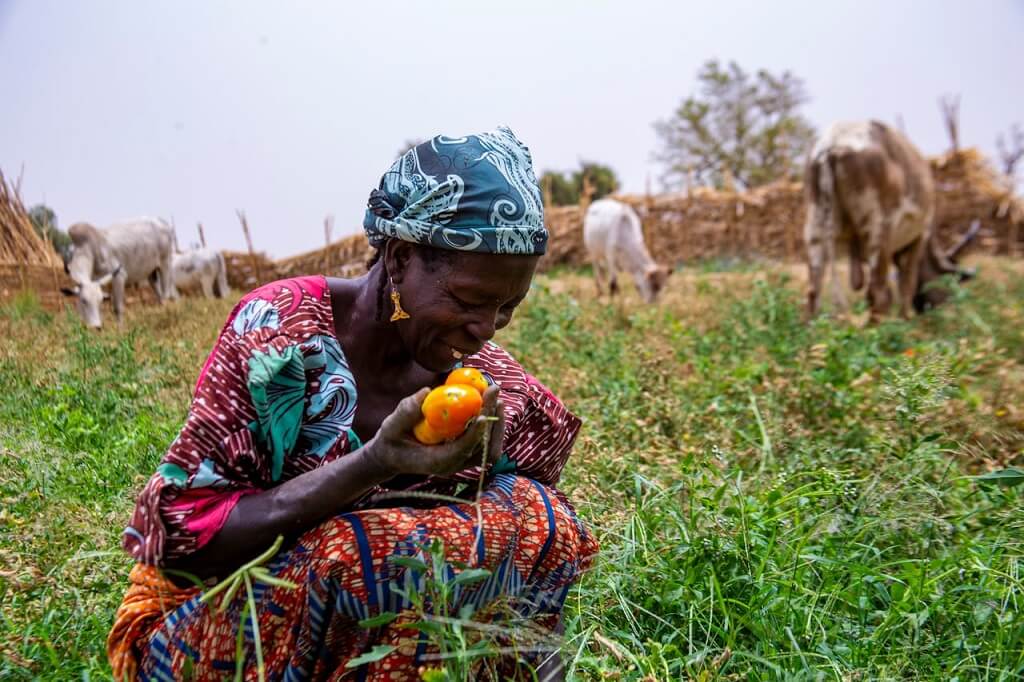
Women functioned as primary food producers across large areas of pre-colonial West Africa. Daily agricultural work required constant engagement with land use, seasonal planning, and food preparation.
Farming activities included clearing fields, planting crops, harvesting produce, and processing food for storage and consumption.
Household survival and broader community stability depended on female control over agricultural cycles and careful management of resources.
Economic authority connected to agriculture shaped daily life in concrete ways. Women managed the cultivation of staple crops such as yams, millet, rice, and maize, which formed the foundation of regional diets.
Oversight of food storage and preservation allowed women to regulate supply during dry seasons and periods of scarcity.
Responsibility for maintaining household food security and surplus positioned women as decision makers whose choices affected family health and communal endurance.
Agricultural leadership also allowed women to organize labor within households and extended families, reinforcing their authority within kinship systems and strengthening community resilience.
Trade

Trade networks in pre-colonial West Africa operated under strong female leadership at both local and regional levels.
Market systems functioned as regulated spaces where women controlled pricing, enforced quality standards, and resolved disputes among traders.
Commercial activity offered access to wealth and strengthened women’s voices in community affairs, since markets served as central meeting points for economic exchange and social interaction.
Authority within trade emerged through organized practices that reflected structured power. Women controlled local and regional marketplaces that acted as economic centers for surrounding communities.
Trader associations formed under female leadership established rules that protected members and ensured fairness in transactions. Long-distance trade routes, including Sahelian salt networks, relied on women who managed logistics, pricing, and distribution.
Commercial success enhanced social standing and enabled women to influence political discussions, public morality, and resource distribution.
Market leadership often extended into broader communal authority, reinforcing women’s roles as key economic actors.
Craftsmanship
Skilled production formed another major area of women’s economic activity in pre-colonial West Africa. Textile weaving, dyeing, pottery, and related crafts supported household economies and regional exchange.
Craft specialization required technical knowledge that developed through practice and instruction within families and organized groups.
Craft-based authority strengthened communities through multiple outcomes. Household income generation supported families alongside agricultural production and reduced dependence on external resources.
Skill transmission across generations occurred through apprenticeship and family instruction, ensuring continuity of techniques and social roles.
Economic stability resulted from consistent production and trade of crafted goods, which sustained local markets and regional exchange networks.
Guild systems organized labor and preserved knowledge, allowing women to maintain long-term economic relevance and independence within pre-colonial West Africa.
Religious and Cultural Leadership in Pre-Colonial West Africa
Spiritual life in pre-colonial West Africa relied heavily on female leadership and ritual authority.
Women served as priestesses, diviners, and intermediaries connecting communities with ancestral forces. Religious responsibility carried moral influence and shaped communal decision-making during times of crisis or transition.
Cultural leadership roles held by women structured belief systems and social memory through active participation, including:
- Custodianship of oral traditions, myths, and communal history
- Direction of rituals, festivals, and rites of passage
- Guardianship of sacred spaces and shrines
Spiritual responsibility positioned women as stabilizing figures whose authority reinforced social cohesion, moral order, and continuity.
Social and Family Roles in Pre-Colonial West Africa
Social organization in pre-colonial West Africa placed women at the center of family life and kinship structures.
Authority developed through lineage systems, age-based organization, and service to the community. Social influence increased across life stages and reinforced collective responsibility.
Matrilineal Systems
Matrilineal societies, such as those among the Akan, traced descent and property through women.
Maternal lines determined inheritance, social identity, and political legitimacy. Senior women exercised authority that shaped family strategy and conflict resolution.
Influence within matrilineal systems operated through clear mechanisms, including:
- Control over lineage continuity and succession
- Economic authority over inherited land and property
- Advisory roles in family and clan decision-making
Age and motherhood elevated status, granting senior women respect and recognized leadership within households and extended families.
Kinship and Age Grades
Age-grade systems organized by women structured labor, education, and social responsibility across communities.
Membership-defined duties linked to specific life stages and strengthened communal bonds.
Functions carried out through age-grade organization included:
- Coordination of communal labor and mutual assistance
- Instruction of younger generations in social norms and skills
- Preservation of customs, values, and moral expectations
Intergenerational knowledge transfer ensured continuity, stability, and shared identity across pre-colonial West Africa.
Summary
Women in pre-colonial West Africa held authority that shaped political leadership, economic production, spiritual life, and social organization.
Power operated through systems that recognized female leadership alongside male authority, creating balanced structures rooted in cooperation and shared responsibility.
Agricultural control, market leadership, craftsmanship, religious guidance, and matrilineal governance positioned women as central actors in community stability and decision-making.
Political influence exercised by Queen Mothers, council members, and diplomats reinforced accountability and continuity.