
Washington, D.C. is more than the capital of the United States. Black history has shaped its streets, neighborhoods, memorials, museums, homes, and public spaces.
African American memory is not kept only behind museum walls.
It is carved into stone, carried through music venues, marked on historic steps, and protected in places connected to struggle, resistance, culture, and achievement.
A strong thesis for this topic is that Washington’s Black history is embedded in its physical spaces, including the National Mall, U Street, Shaw, Cedar Hill, major museums, and memorials.
Together, these places show that African American history is not pushed to the margins of the capital.
Instead, it is central to the identity of Washington and central to the history of the United States.
A Monumental Stage for Black History
National Mall is one of the most symbolic public spaces in America. Monuments, memorials, and museums located there shape how the nation remembers its past.
Although many visitors associate the Mall with presidents, wars, and national ideals, it also carries a powerful Black historical memory.
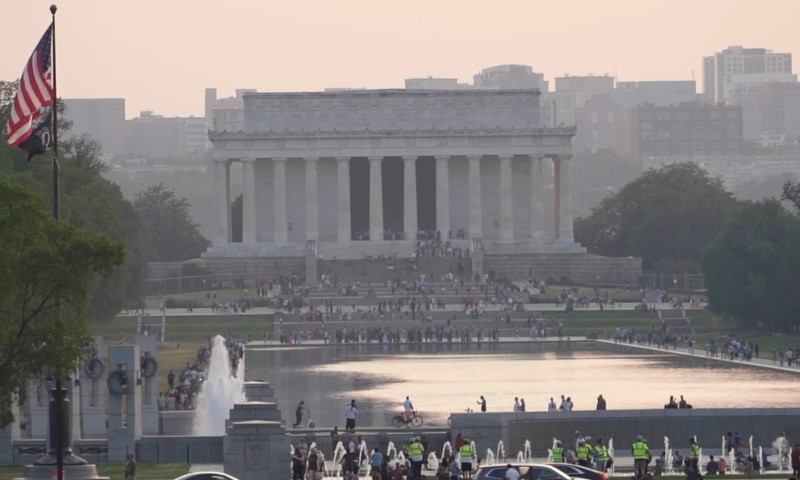
Lincoln Memorial is one of the clearest examples.
Built to honor Abraham Lincoln, it also became a major site in the Civil Rights Movement. Martin Luther King Jr. delivered his “I Have a Dream” speech there during the March on Washington in 1963.
His words connected the promise of American democracy with the unfinished fight for racial justice.
A stone marker now identifies the place where King spoke. That marker turns the steps themselves into a site of memory.
People do not only look at the memorial as an object. They also stand where a major call for freedom and equality entered national history.
Black history changes the meaning of the National Mall. Black history changes the meaning of the National Mall.
Nearby public spaces, including Columbia Island Marina, can help connect that central civic area to Washington’s wider Potomac River setting.
Civic spaces that once centered older national stories now also carry memories of protest, courage, and demands for justice.
African American history does not exist apart from national history.
It reshapes the meaning of America’s most famous public spaces.
National Museum of African American History and Culture
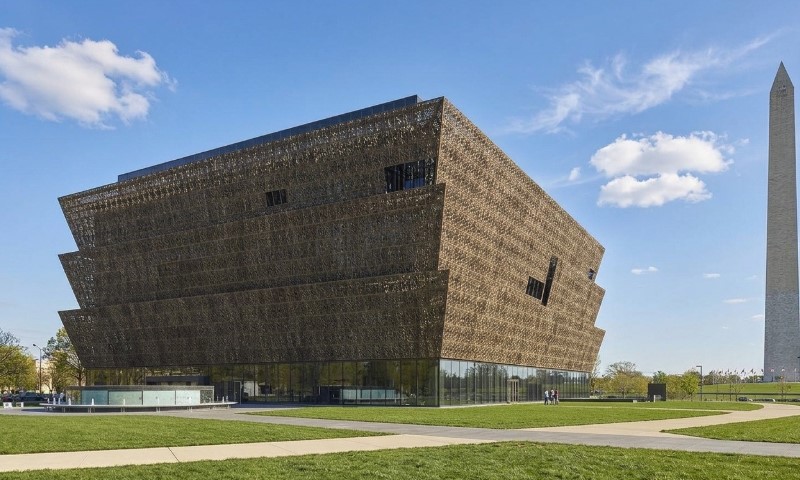
Smithsonian National Museum of African American History and Culture is one of Washington’s strongest examples of Black history made visible through architecture, artifacts, and public memory.
Located on the National Mall, the museum tells the story of African American life, history, and culture at the symbolic center of the nation.
Its placement matters. Older monuments around the Mall often focus on presidents, military victory, and national founding ideals.
African American history is placed among them, making a clear statement that Black history belongs at the heart of the American story.
Visitors encounter the museum not as an addition on the edge of the city, but as part of the nation’s central civic space.
Museum design adds to that message in several ways:
- A bold exterior separates the building visually compared with many nearby stone monuments.
- A central location places African American history beside major national memorials.
- Exhibitions connect personal objects, community stories, and national events.
Museum architecture also matters. Its design differs sharply compared with many nearby stone monuments.
Its exterior form gives the building a strong visual identity, while its location ties it to the larger meaning of the Mall.
In that way, the building itself becomes a monument, not only a container for exhibits.
Long efforts led to the creation of this museum. Its presence answers a historical need for national recognition of African American contributions, suffering, creativity, and achievement.
Through objects, stories, and design, the museum gives physical form to histories that were too often minimized in public memory.
Neighborhoods as Cultural Spaces
Shaw and U Street show that Black history in Washington is not limited to federal monuments. Neighborhoods also carry memory.
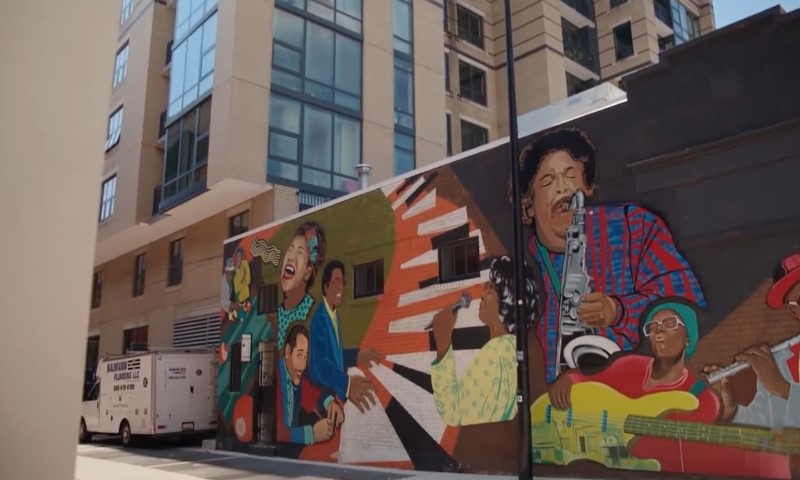
Businesses, theaters, churches, restaurants, murals, and music venues all help mark the city with African American life and culture.
Shaw has been known as part of the “Heart of Chocolate City.” Its history includes escaped slaves, Black institutions, Black businesses, and strong community networks.
U Street became known as “Black Broadway.” It was a major center of African American art, music, nightlife, and performance.
Musicians, performers, and audiences helped make the corridor a famous cultural district.
Clubs, theaters, and commercial spaces gave Black artists a public stage during a time when segregation limited access in many other parts of American life.
Community memory appears in places people still move through and use:
- Historic theaters connect the area to Black performance history.
- Restaurants and storefronts preserve commercial and social memory.
- Murals and walking tours make neighborhood history visible in daily life.
Memory in U Street and Shaw lives through more than plaques or official memorials. It also appears in storefronts, walking tours, performance spaces, and public art.
African American Civil War Memorial
African American Civil War Memorial, located near U Street, honors African American soldiers who fought for the Union during the Civil War.
It gives public recognition to men whose courage helped change the direction of the war and the future of slavery in the United States.
Black military participation was often left out of older public memory.
Many Civil War narratives focused on generals, presidents, and battles while giving less attention to African American agency.
Memorials shape public memory, so absence matters. When Black soldiers are not named or honored, their role in national freedom can be forgotten.
African American Civil War Memorial corrects that absence. Names and sculptural forms place Black sacrifice in public view.
Visitors encounter a version of Civil War memory that includes African American courage, patriotism, and action.
Memorial challenges narrow views of the Civil War. It shows that Black people were not only victims of slavery or passive observers of national conflict.
They fought, organized, sacrificed, and helped push the nation toward emancipation.
Frederick Douglass National Historic Site
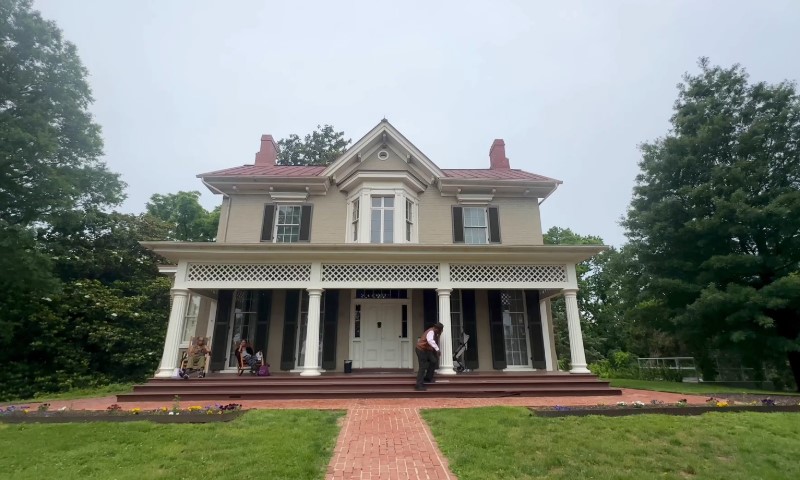
Cedar Hill, the home of Frederick Douglass in Anacostia, offers another kind of historic space.
Unlike a monument built later, Cedar Hill preserves the domestic setting of a major Black leader.
It allows visitors to connect Douglass’s public work with the place where he lived, thought, wrote, and welcomed guests.
Frederick Douglass was an abolitionist, writer, orator, editor, and political thinker. His life represented the fight against slavery and the demand for full citizenship.
Cedar Hill connects his ideas to a physical home, showing Black independence and self-determination in a city shaped by national politics.
A home can carry political meaning. Cedar Hill was not only a private residence. It represented achievement, ownership, intellect, and freedom.
Douglass’s life there showed that Black leadership belonged in the capital and that African American voices had authority in debates about democracy and justice.
Cedar Hill helps visitors see Douglass through parts of daily life connected to his public role:
- Rooms reveal the setting where he read, wrote, and worked.
- Personal spaces connect national leadership with private life.
- Anacostia places his story within a Washington community rather than only within federal institutions.
Frederick Douglass National Historic Site allows visitors to see history at a human scale. Rooms, objects, and views around the property make Douglass less distant and more present.
Museums, Artifacts, and Civil Rights Memory
View this post on Instagram
Washington’s Black history is also carried through museum objects.
Greensboro Lunch Counter at the Smithsonian National Museum of American History is an important example.
It connects visitors to the 1960 sit-in movement, when Black college students challenged segregation by refusing to leave a whites-only lunch counter.
A lunch counter might seem ordinary at first. In the context of the Civil Rights Movement, it became a site of protest, discipline, and courage.
Students who sat there challenged laws and customs that treated Black citizens as unequal. Their action helped inspire similar protests across the country.
Once placed inside a museum, the lunch counter gains another kind of power. It no longer functions as part of a store, but it still carries the memory of public protest.
Visitors stand before it and confront the physical setting of segregation and resistance.
Museum objects can carry historical force because they connect physical materials to public action:
- Ordinary furniture can show how segregation shaped daily life.
- Preserved objects can make protest feel immediate and visible.
- Indoor exhibits can protect memories tied to outdoor streets, stores, and public counters.
Museums turn objects into spaces of education and remembrance. A counter, a sign, a photograph, or a personal item can carry the force of a larger historical struggle.
Washington preserves Black history outdoors in streets and memorials, and indoors through artifacts that make past conflicts visible.
Summary
Washington can be read as a city marked by Black history.
Stone markers, museum buildings, neighborhood streets, historic homes, memorial sculptures, and cultural corridors all carry stories of African American life. Each place adds another layer to the city’s identity.
Walking through Washington means encountering more than government buildings and national monuments.
It means meeting the memory of people who resisted slavery, fought segregation, built communities, created art, defended the nation, and demanded justice.