
Dating apps are taking a larger role in social connections across Africa, especially among younger users who rely on mobile devices for communication, entertainment, and daily planning.
Many people now use dating platforms not only for romance, but also for friendship, curiosity, and wider social discovery.
Global dating-app revenue is expected to reach USD 12.52 billion in 2026, rising after USD 11.61 billion in 2025. Forecasts also point to continued expansion, with the market projected to reach USD 24.85 billion by 2035 at a 7.91% CAGR.
Sagaci Research surveyed 13,557 adults across 27 African countries to analyze dating-app usage on the continent.
Findings show that 28% of surveyed Africans have used a dating app, signaling that online dating is no longer limited to a small early-adopter group.
At the same time, privacy concerns, social stigma, scams, and cultural expectations continue to shape how people use these platforms.
Tinder
Tinder leads the African dating-app market overall and has the strongest presence across many Anglophone markets.
Tinder benefits because it is widely recognized, easy to use, and familiar to younger mobile users.
Its swipe-based format makes it simple for users to browse profiles quickly, while its broad user base increases the chance of finding matches in major cities and high-adoption markets.
Country strength is one of Tinder’s clearest advantages across Anglophone Africa:
- Kenya
- South Africa
- Tanzania
- Zambia
- Zimbabwe
Sagaci data also indicates that Tinder has a larger female user base compared with Badoo.
A stronger gender balance can support better engagement, especially in markets where safety and trust are major concerns.
Badoo
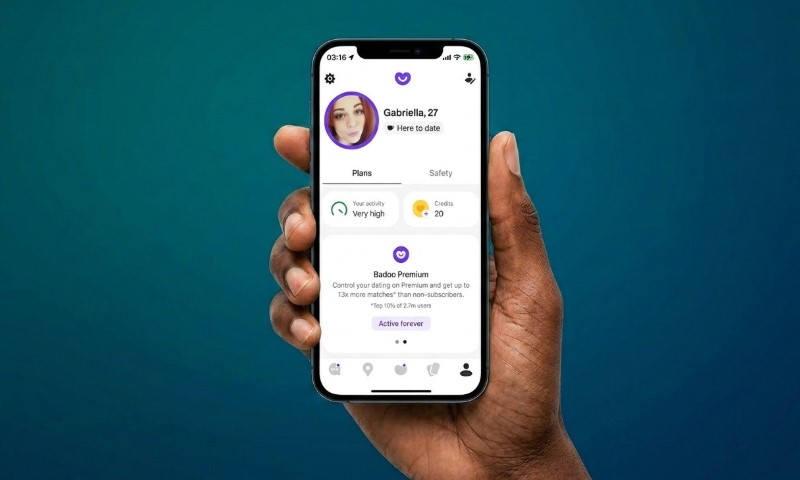
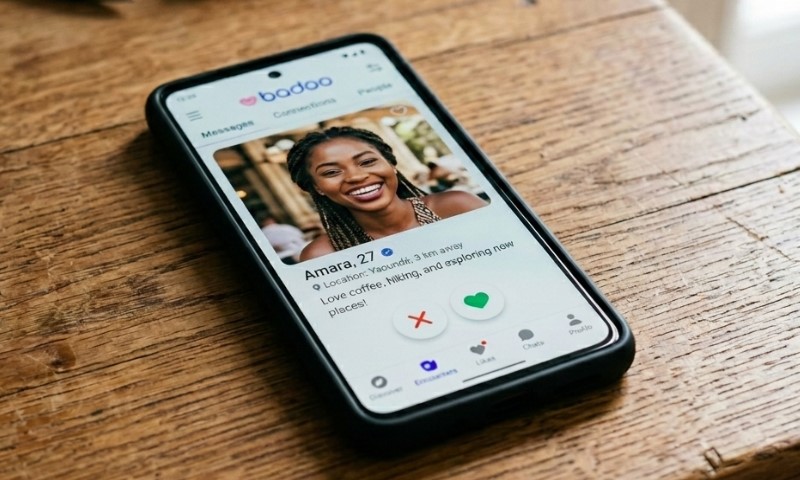
Badoo ranks as the second major dating app in Africa and follows closely behind Tinder in overall usage. Its strongest position appears in Francophone markets.
Badoo has been active in online dating for many years, which helps it keep brand awareness across several African countries.
Its usage pattern is especially notable among men, with Sagaci reporting stronger adoption among male users.
Francophone markets give Badoo one of its clearest regional advantages. Countries where Badoo performs especially well include:
- Cameroon
- Congo
- Côte d’Ivoire
- Gabon
In these markets, Badoo competes closely with Tinder and is often one of the first dating apps users recognize.
SoulMatcher
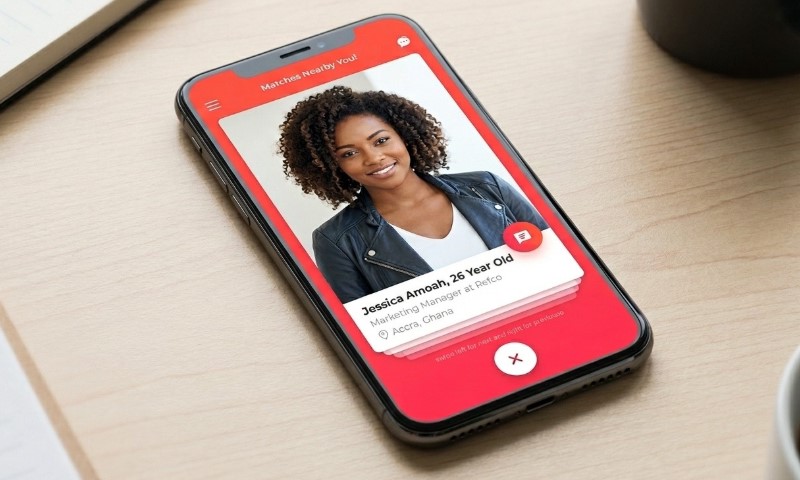
SoulMatcher is a dating and matchmaking platform that places strong emphasis on meaningful interaction and better conversation quality.
Its dating advice content highlights how flirty questions can help users create stronger first impressions, reduce awkward openings, and move beyond generic chat.
Examples include flirty questions to ask a girl, playful questions about dream dates, music, humor, personality, travel, and relationship expectations.
This makes SoulMatcher relevant to users who want more than quick profile browsing.
For African dating-app users, especially those using apps for friendship, curiosity, or serious dating, conversation prompts can help turn matches into more natural exchanges.
SoulMatcher fits into the wider trend of dating apps becoming broader social-discovery platforms, where success depends not only on matching but also on how users start and maintain conversations.
Bumble
Bumble is a growing alternative in Africa, especially among users who want dating experiences centered on safety, control, and more intentional communication. Sagaci identifies Bumble as popular in Ghana and Uganda.
Bumble’s model gives women more control in many match situations. That can matter in markets where unwanted messages, fake profiles, and trust issues affect dating-app behavior.
Growth potential for Bumble is strongest among users who want a more managed dating experience, especially in groups such as:
- Urban users
- Educated users
- People seeking better moderation
- People who value stronger privacy tools
- People who want clearer expectations during matching
Its positioning also suits users who are looking for serious conversations rather than fast, casual browsing only.
Hinge
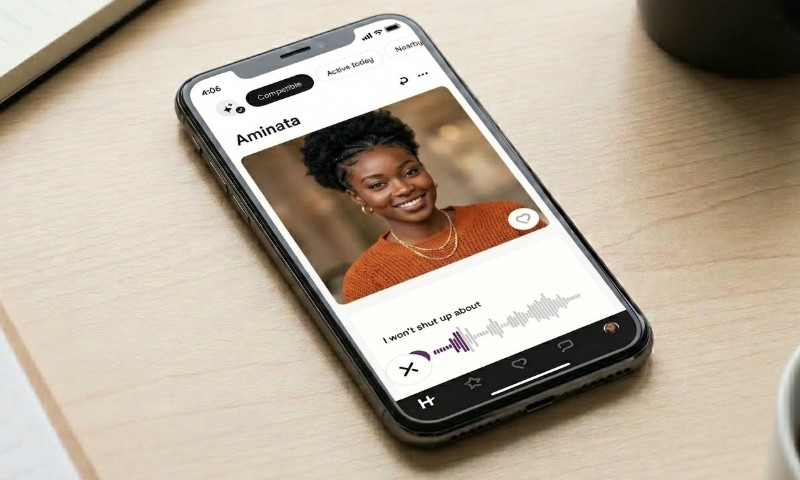
Hinge has a strong position in South Africa, where it ranked number 2 among Android dating apps on Similarweb’s May 16, 2026 ranking.
Its placement behind Tinder shows that South Africa has a more mature and segmented dating-app market than many other African countries.
Hinge attracts users who want more relationship-focused matches. Its profile prompts and conversation cues encourage people to share more context about personality, values, and dating goals.
South Africa’s ranking gives Hinge a clear place near the top of the market:
- Tinder ranked number 1
- Hinge ranked number 2
- Badoo ranked number 3
- Bumble ranked number 4
- Boo ranked number 5
Hinge’s high ranking suggests that many users in South Africa are moving past simple swipe-based discovery and looking for apps that support more thoughtful matching.
Dating.com
View this post on Instagram
Dating.com is popular in selected African markets, especially Nigeria, Uganda, and Zambia.
Its value is tied to users who are interested in international dating, cross-border communication, or meeting people outside their immediate city or country.
Cross-border dating can be important in Africa because of migration, study, work mobility, and diaspora connections. Dating.com fits users who want a broader match pool and may be open to long-distance communication.
Several markets make Dating.com especially relevant in Africa:
- Nigeria, due to its large population, high mobile activity, and strong digital culture
- Uganda, where international dating platforms show meaningful traction
- Zambia, where broader match pools can attract users open to cross-border connections
Together, these markets show that international dating platforms can gain traction outside Africa’s largest economies.
Boo

Boo is an emerging social and dating app focused on personality-based matching and social discovery.
In South Africa, Boo ranked number 5 among Android dating apps on Similarweb’s May 16, 2026 list.
Boo’s growth points to rising interest in apps that go past photos and short bios.
Personality matching, interest-based discovery, and social features can help users feel that matches are more compatible.
South Africa’s ranking also shows that newer dating platforms can break into the top tier when they offer users a clear reason to try something different.
OkCupid
OkCupid is a recognizable global dating brand with a smaller but relevant African user base.
Sagaci lists OkCupid among dating apps used in Africa, and Similarweb ranked it number 13 in South Africa’s Android dating category.
OkCupid is best known for question-based matching and detailed profiles. That format can work well for users who want compatibility signals before starting conversations.
OkCupid’s position in Africa is more selective than Tinder or Badoo, but several details still make it relevant:
- Sagaci lists OkCupid among dating apps used in Africa
- Similarweb ranked OkCupid number 13 in South Africa’s Android dating category
- Detailed profiles can support users who prefer more information before matching
Although OkCupid does not lead Africa-wide adoption, its presence shows that some users still value longer profiles, stated preferences, and more detailed matchmaking systems.
Key User Trends in Africa
Sagaci reports that 28% of surveyed Africans have used a dating app.
That share is meaningful because online dating has moved into a broader social category, especially among mobile-first users.
Usage patterns point to a market that is not limited to one gender, income group, or dating goal:
- 28% of surveyed Africans have used a dating app
- Usage is balanced between men and women
- Engagement is slightly higher among upper socio-economic classes
- Users aged 26 to 45 form the primary dating-app user base
Higher-income users often have better smartphones, more reliable data access, and stronger comfort with paid digital products.
Users aged 26 to 45 are often socially active, working, relocating, or seeking serious relationships, which makes dating apps useful for expanding social circles.
Romance is not the only reason people use dating apps. Sagaci’s findings show two major non-romantic motivations:
- 43% of users use dating apps to make new friends
- 35% use dating apps out of curiosity
These numbers show that dating apps often function as broader social platforms, not only matchmaking tools.
Meeting through dating apps is more common among recent couples.
That pattern suggests growing acceptance and possible matchmaking effectiveness as more people become comfortable with online introductions.
Privacy, safety, verification, and cultural relevance are becoming more important.
Users want stronger controls over profile visibility, better protection against fake accounts, and tools that help them avoid scams or unwanted attention.
AI-based recommendations and personalization are also becoming more important globally.
Better matching systems can improve compatibility, reduce irrelevant matches, support safety checks, and increase user engagement.
Summary
Tinder and Badoo are the clearest Africa-wide leaders in 2026.
South Africa shows a more mature dating-app market with a broader mix of platforms.
Africa’s dating-app market is becoming more segmented by country, language, culture, income level, gender patterns, and relationship intent.
Users are not all looking for the same type of match, which creates room for large global platforms, relationship-focused apps, social discovery apps, international dating platforms, and niche religious or cultural services.