

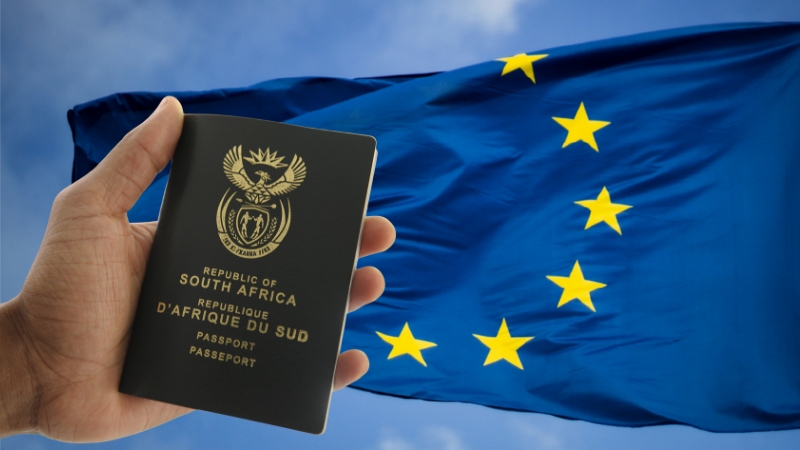
The Schengen Zone consists of 27 European countries that removed internal border controls to allow free movement of people across member states. Travel across participating countries functions as movement within a single territory once lawful entry occurs.
African passport holders face strict visa requirements for entry into Schengen countries, though diplomatic efforts by certain states show gradual progress.
South Africa demonstrates a notable example through recent policy changes aimed at strengthening international mobility.
Recent visa-free agreements granted by South Africa to selected European countries reflect an ongoing effort to rebalance travel access and encourage reciprocal arrangements.
Let’s take a look at this topic in greater detail.
Categories of Entry Options to the Schengen Zone for African Nationals
Entry options into Schengen countries for African passport holders depend largely on nationality, diplomatic relations, and existing bilateral agreements.
Access usually falls into two main categories: visa-free entry in limited cases and visa-required short stays.
Each option carries specific conditions, limitations, and strategic implications for travelers and governments alike.
Visa-Free Access Limited Cases
Visa-free access into Schengen countries remains uncommon for African nationals.
South Africa represents an important exception due to recent policy actions aimed at expanding international mobility through diplomatic engagement.
South Africa granted visa-free entry for short stays of up to ninety days to nationals of selected European countries.
Current beneficiaries include:
- Lithuania
- Bulgaria
- Estonia
South Africa has expanded its visa-free entry agreement list by adding Estonia.
The agreement permits Estonian citizens to visit South Africa for periods up to 90 days within 180 days without a visa.
This move aims to bolster bilateral ties in areas such as tourism, technology,… pic.twitter.com/CXBDnDluO4
— Business Insider Africa (@BusInsiderSSA) September 26, 2025
Arrangements operate on a unilateral basis. South African passport holders still require visas to enter those same European states unless reciprocal agreements are reached.
Additional European countries recently granted visa-free access to South Africa as part of broader diplomatic outreach.
Such decisions reflect growing engagement with Central and Eastern Europe and include:
- Slovakia
- Latvia
- Hungary
- Romania
Visa policy adjustments function as a strategic tool designed to encourage tourism, stimulate investment flows, and strengthen political cooperation.
Long-term objectives include improving negotiating leverage and laying the groundwork for future reciprocity agreements.
Visa Required for Short Stays Type C Schengen Visa
View this post on Instagram
Short-stay travel into Schengen countries for African nationals usually requires a Type C Schengen visa.
Access granted under this category applies across all Schengen member states once entry occurs.
Type C visas permit stays of up to ninety days within any rolling one hundred eighty-day period. Permitted purposes of travel include:
- Tourism
- Business activities
- Family or social visits
- Educational or cultural participation
- Medical treatment
- Airport transit
The majority of African passport holders must complete a formal application prior to travel. South African citizens remain subject to this requirement for nearly all Schengen destinations.
Validity applies collectively across the Schengen area. Movement between member states remains allowed after lawful entry, provided time limits and visa conditions are respected.
Practical Considerations for African Travelers
Now, let us address several practical considerations African travelers should be aware of.
Visa Validity and Duration
Schengen rules limit stays to ninety days within any rolling one hundred eighty-day period.
Careful tracking of travel days remains essential to avoid overstays and penalties.
Online travel day calculators assist travelers in monitoring compliance with Schengen time limits.
Additionally, the introduction of across Europe and beyond may offer more accessible routes for African travelers, particularly those planning multi-country visits within the Schengen Zone.
Health Insurance Requirement
Medical insurance coverage equal to or exceeding 30,000 euros remains mandatory.
Coverage must apply across all Schengen member states for the entire duration of stay.
Insurance may be arranged prior to application submission and must meet official Schengen standards.
Residency for Non-South African Applicants
Applicants holding non-South African citizenship who apply in South Africa must present a valid temporary or permanent residence permit.
Permit validity must extend at least three months after the intended return date.
Specific Case Study – South African Passport Holders
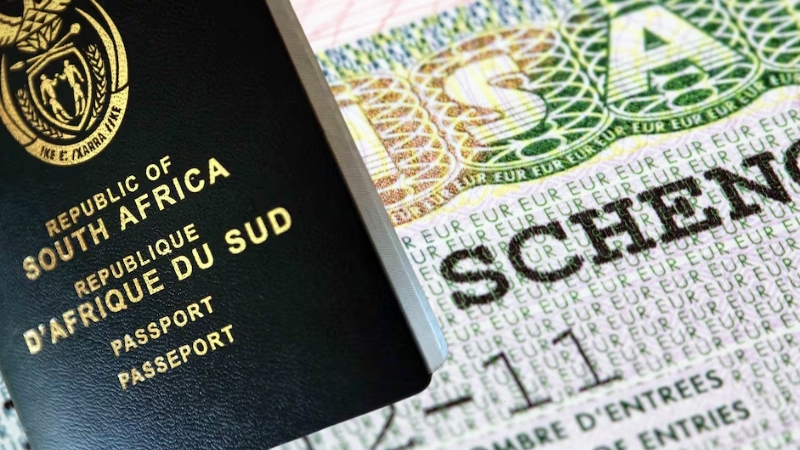
South African citizens require a Schengen visa for entry into most member states, including Greece. Applications for Greece are processed through official visa centers and consular services.
Visa applications may be submitted between six months and fifteen days prior to intended travel. Submission locations include visa application centers in Johannesburg, Cape Town, and Durban, along with Greek consulates.
Standard processing time equals fifteen calendar days, with possible extensions up to forty-five days in complex situations. Personal interviews may be requested during assessment.
Passport validity must extend at least three months after the intended return date and must have been issued within the past ten years.
Required documents:
- Completed visa application form
- Two recent passport photographs
- Valid passport meeting Schengen validity standards
- Medical travel insurance covering at least 30,000 euros across all Schengen countries
Insurance policies may be purchased independently or through approved partners associated with visa centers.
Travel with a Schengen Visa or a Residence Permit
South Africans residing in Schengen countries such as Germany may travel freely within Schengen when holding valid documentation.
Acceptable documents include a multiple-entry Schengen visa, a German residence permit, or an EU residence permit.
Re-entry into Germany and movement across Schengen remains permitted as long as documentation remains valid and no country-specific restrictions apply.
Certain non-Schengen countries may allow entry using a Schengen residence permit or visa. Individual destination rules must be reviewed before travel.
Trends and Policy Outlook
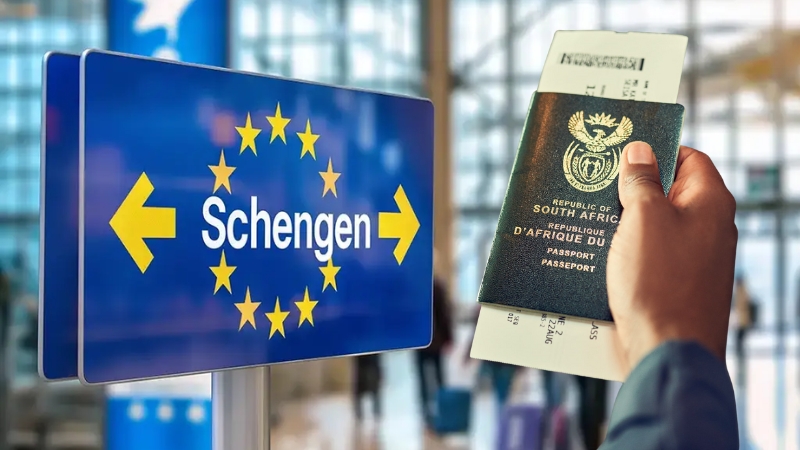
Visa policy between South Africa and European countries continues to reflect a clear imbalance in access.
European citizens benefit from visa-free entry into South Africa, while South African passport holders still face mandatory visa requirements for travel to most European destinations.
Mobility asymmetry remains a central issue in ongoing diplomatic discussions.
Reciprocity remains a stated objective in bilateral and multilateral negotiations. Engagement occurs through:
- Diplomatic channels
- Trade discussions
- Tourism-focused agreements
Progress depends on political alignment, migration management concerns, and economic cooperation priorities on both sides.
South Africa actively positions itself as a preferred destination for European tourism and investment. Relaxed entry rules for European nationals support broader economic strategies linked to visitor growth, business travel, and foreign direct investment.
Visa policy serves as a practical instrument supporting these objectives.
Policy direction aligns with long-term national goals tied to economic expansion and strengthened bilateral relations.
Entry facilitation measures aim to improve South Africa’s competitiveness as a business and tourism destination while increasing leverage in future mobility negotiations.
Prospects for reciprocal visa arrangements appear strongest with Central and Eastern European countries.
Recent engagement with states in that region reflects shared economic interests and expanding political cooperation.
Diplomatic outreach focuses on countries more open to gradual mobility reform.
Summary
@happytravellerza How to apply for a Schengen visa as a South African #southafricantraveller ♬ original sound – Happy Traveller
Most African passport holders encounter substantial visa restrictions when planning travel to Schengen countries. South Africa demonstrates measured progress through diplomatic engagement and targeted visa policy adjustments.
Holding a valid Schengen visa or EU residence permit increases travel flexibility and simplifies movement across member states.
Careful planning, accurate documentation, and awareness of evolving visa policies remain essential for maximizing international mobility opportunities.