

Nigeria’s national grid keeps failing households, businesses, and public institutions through recurring outages, voltage swings, and system collapses.
Ongoing instability has pushed communities and companies to look at decentralized power options that can work independently of the transmission network.
A major near-term development is now on the calendar: 28 new mini-grids are scheduled to reach completion in Q1 2026 under the leadership and coordination of Nigeria’s Rural Electrification Agency, REA.
Momentum around that target signals a shift toward packaged, repeatable delivery rather than one-off pilots.
What “28 New Mini-Grids” Means in Practice

Q1 2026 is the completion target, and REA is the coordinating body that keeps design, procurement, and execution aligned. Coordination matters because delivery risk rarely comes from one big failure.
More often, delays stack up across land access, community approvals, logistics, and inter-agency sign-off, then turn a buildable project into a slow project.
Central program management can compress those cycles by standardizing documents, enforcing milestones, and keeping responsibilities clear.
Schedule discipline also improves once projects share a common playbook. Shared templates let site teams avoid rebuilding contracts and technical specifications across locations.
Viability-gap support can then narrow the gap between the cost of reliable power and what households and enterprises can pay, without forcing developers to accept tariffs that fail to cover operations.
A pipeline approach usually has a few working parts that keep projects bankable while staying realistic on pricing:
- Site bundling that groups communities with similar load profiles and construction needs
- Standard bid documents that reduce negotiation time and lower legal cost per site
- Clear performance milestones tied to disbursement so funding matches verified progress
- Community engagement steps that happen early, not after equipment arrives
System architecture in many Nigerian mini-grids centers on solar generation, battery storage, local distribution, and prepaid or smart metering.
Rural Energy Access and Mini-Grids in Nigeria
Nigeria still carries a large electricity access gap, and rural communities account for a large share of unmet need. Lack of reliable power acts like a tax on daily life and local commerce.
Enterprises spend more per unit of energy using diesel. Students lose study time.
Clinics struggle with cold storage, sterilization, and reliable lighting. Phone charging and internet access become recurring friction points, even where mobile coverage exists.
People looking to make the most of improved power availability for mobile-first earning and experimentation should take a look at several Android device options.
Costs show up in ways that are easy to miss. Food spoils faster without cooling. Water pumping becomes irregular.
Small workshops cap their output to match generator fuel budgets.
Mini-grids operate as local infrastructure that unlocks multiple services at once.
Reliable electricity can support household lighting and phone charging, plus small commercial activity that creates local income.
Health and education impacts can be direct, especially once refrigeration and evening lighting become dependable.
Market activity can also extend after dark, which can improve earnings and reduce safety risks tied to unlit streets and paths.
Policy and Regulatory Foundations Enabling the 28 Mini-Grids
Nigeria’s mini-grid rules rest on differentiated treatment by project size and type.
Separate pathways exist for isolated systems that operate independently and interconnected systems that can link with the national network under defined conditions.
A clear pathway matters because developers need a predictable process for approvals, tariffs, consumer protection steps, and long-term operating rights.
Regulatory thresholds shape speed and investor confidence.
Registration, permitting, and licensing requirements vary based on system size and connection type, and those distinctions can reduce friction for smaller systems while still maintaining oversight for larger projects.
Approval speed matters most at the start, since delays at permitting or tariff review can stall financing and push construction into the wrong season for logistics.
Key regulatory concepts that directly affect deployment tempo and project finance include:
- Clear size-based requirements that set predictable compliance steps
- Transparent tariff approval expectations that reduce negotiation cycles
- Consumer protection measures that support trust and payment discipline
- Defined rights and obligations for isolated and interconnected systems
Tariffs often depend on negotiated agreements aligned with community expectations, paired with regulator involvement where needed.
Cost recovery remains necessary for long-term operations, since batteries degrade, inverters fail, meters need replacement, and staff need steady pay.
Community buy-in is just as important, since trust affects connection uptake, timely payment, and willingness to report tampering or theft.
How Projects Get Built and Sustained
View this post on Instagram
Most mini-grids rely on a capital stack that combines grants or viability-gap support with private investment.
Grants lower the upfront burden and can reduce required tariffs.
Private capital then supports construction, operations, and maintenance, since long-term performance depends on disciplined upkeep and customer service, not only installation.
Viability-gap support is often the hinge that makes projects financeable.
Rural load profiles can be thin early on, and demand growth can take time.
Support can bridge early cash flow weakness while operators build connections, grow productive demand, and stabilize payment behavior.
Funding and delivery often move through large distributed energy programs that are designed to expand access and attract developers into rural markets.
Programs can underwrite feasibility work, coordinate community engagement, support procurement, and tie funds to measurable results at commissioning and early operations.
Nigeria Within the Wider African Mini-Grid Scale-Up Moment
Mission 300 and similar continent-wide efforts have raised the profile of mini-grids as a practical path to faster electrification.
Nigeria’s plan for 28 new mini-grids fits that broader push for quicker connections and stronger reliability through distributed energy, especially in areas where grid extension is slow or financially hard to justify.
Industry leaders often argue that scale requires time-bound capital plans and standardization, paired with finance products that match local revenue realities.
Local-currency debt is frequently cited as a missing piece, since revenue is often naira-denominated, and currency mismatch can turn a technically successful project into a financial stress case.
Common scale requirements repeated across the sector include the following, and each item maps to a practical constraint developers face:
- Standard designs and contracts that shorten procurement cycles
- Local-currency debt that reduces exchange-rate exposure
- Tariff rules that allow cost recovery and stable operations
- KPI reporting that tracks enterprise growth, service quality, and reliability
Expected Impacts of the 28 Mini-Grids
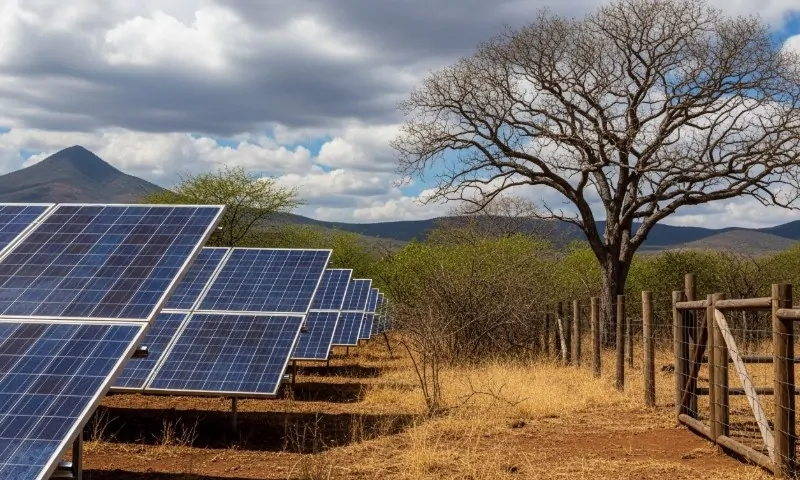
Near-term impacts should show up first in reliability.
Fewer hours on diesel generation can reduce household energy costs and cut small business operating expenses.
Better continuity can also raise resilience during national grid collapses and routine outages, since mini-grids can operate independently in isolated configurations.
Reliability improvements can translate into measurable day-to-day changes in community routines, such as:
- Longer evening hours for commerce and study
- Lower diesel spend and fewer generator repairs
- More consistent refrigeration for health and food needs
Socioeconomic outcomes often show up as productivity gains in micro and small enterprises, plus stronger service delivery in schools and clinics.
Cold storage, irrigation, and digital services can become more viable once electricity stops being intermittent.
Extended operating hours can also improve local income, since market activity often depends on lighting and device charging availability.
Summary
A clear message ties the rollout together: 28 mini-grids scheduled for completion in Q1 2026 represent a concrete reliability push for rural and peri-urban communities under REA coordination.
Tangible improvements can arrive quickly once commissioning and customer onboarding move ahead.
Repeat delivery, stable financing structures, and clear rules can turn a defined set of 28 projects into a larger pipeline.