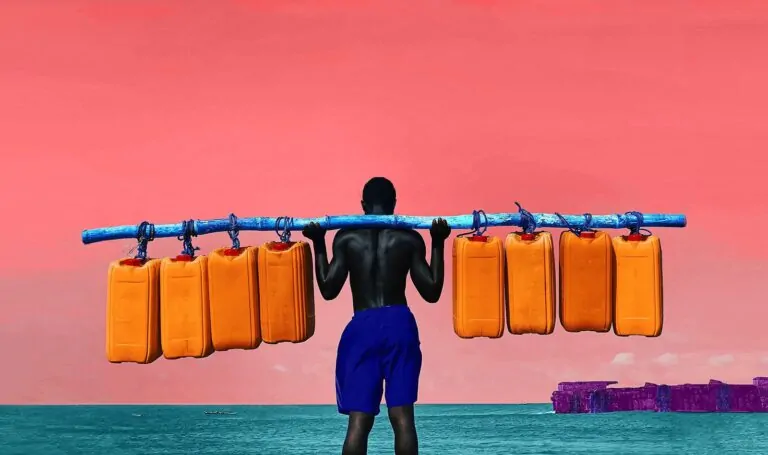

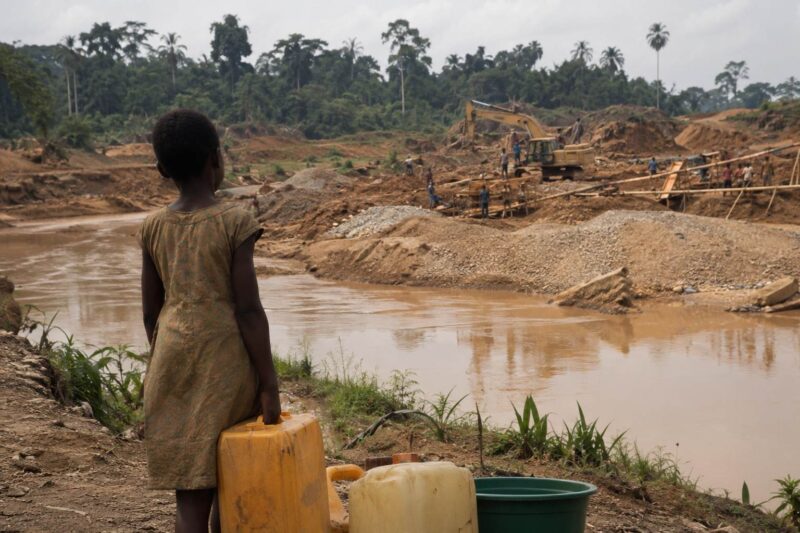
In the Ghanaian village of Ayensuadze, 14-year-old Hawa spends part of her day collecting water instead of studying. The nearby river has been affected by illegal gold mining, leaving her family dependent on water sources that take time and effort to reach.
Her experience is part of a growing problem across Ghana’s mining regions. Gold is bringing new income to rural communities, but farmers are losing valuable land, drinking water is becoming harder to obtain, and families are arguing over the future of places they have occupied for generations.
Ghana produced a record 5.94 million ounces of gold in 2025. More than half came from small-scale miners, whose output reached 3.11 million ounces, according to figures released by the mining industry. The growth has created economic opportunities in communities where farming previously supported much of the local population.
Yet some of the villages closest to Ghana’s gold deposits are also bearing the heaviest environmental costs.
Mining Is Giving Young People an Alternative to Farming
In rural Ghana, cocoa farming has traditionally supported families across generations. Parents cultivate their land, children help during harvest periods, and income arrives when crops are sold.
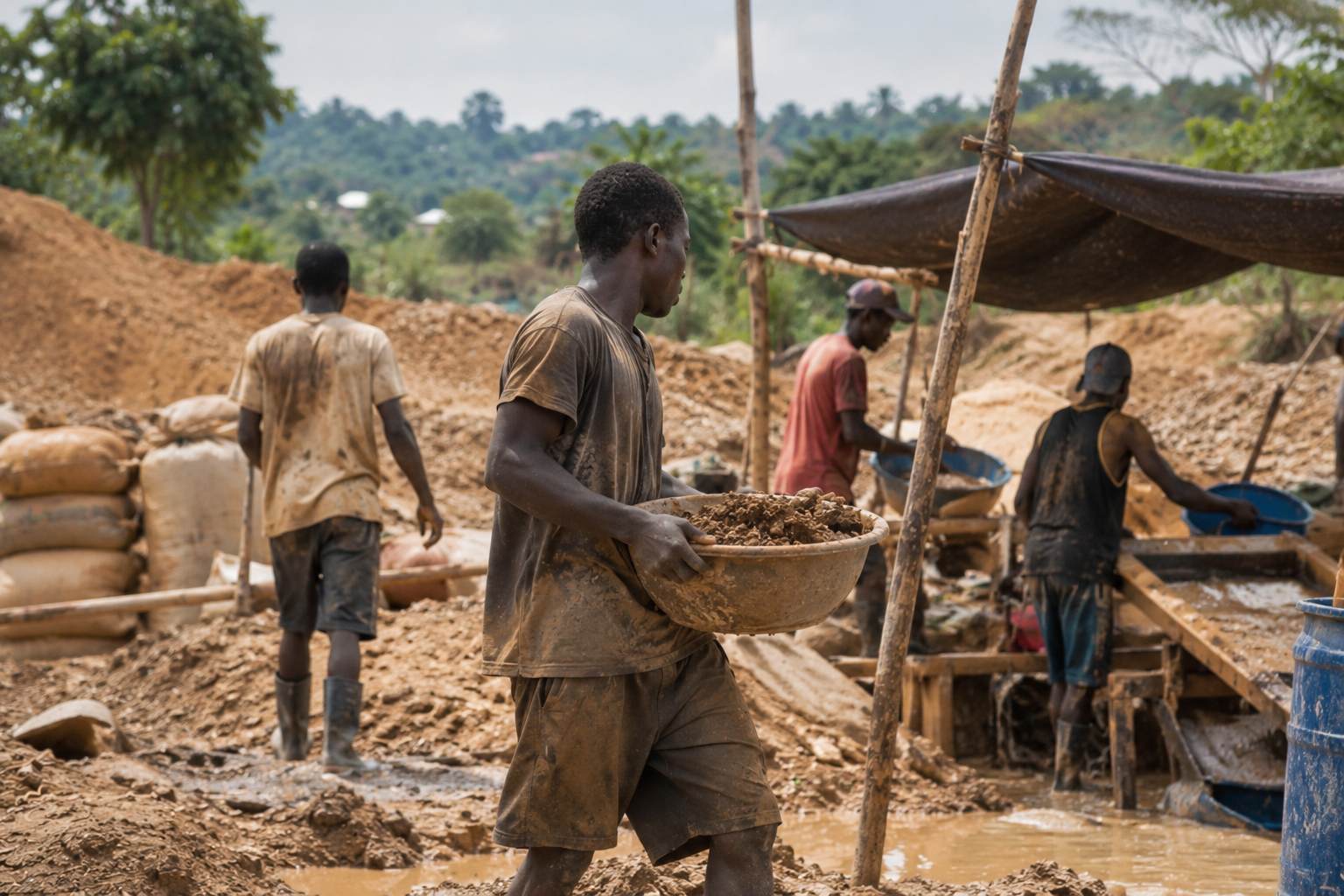
Gold mining offers another way to earn money. Young workers can join excavation crews, transport materials or help wash mineral deposits. Successful operations can provide income much sooner than a cocoa farm waiting for its next harvest.
Mining also creates business for food sellers, transport operators and equipment repair workshops. A village near an active site may attract workers from other districts, increasing sales for traders and demand for rented accommodation.
The attraction of mining becomes particularly significant when agricultural earnings are low or unpredictable. Crop diseases, changing rainfall and expensive farming supplies have already placed financial pressure on many cocoa producers.
However, gold earnings are uncertain. Workers may spend days digging without recovering enough gold to earn a worthwhile payment. Unlicensed operations also face the risk of closure and equipment confiscation.
Some families benefit from mining wages, while others lose the agricultural work that previously supported them. The consequences depend heavily on who controls the land and who receives the mining income.
Cocoa Farmers Are Watching Their Land Disappear
A cocoa plantation represents years of work. Newly planted trees need time to mature, and established farms can continue producing crops for many seasons when properly maintained.
Gold extraction can destroy that investment in a few days.
In March 2025, farmers described losing cocoa plantations after miners moved onto agricultural land. Some reported selling their farms to operators searching for gold, while others described being forced to abandon fields after polluted water entered their plantations.
Atta Mansa, a cocoa farmer interviewed in the report, explained that people searching for gold were purchasing farmland and clearing it for excavation.
For a farmer who sells a plantation, the immediate payment may exceed several years of expected agricultural income. But once excavators remove the topsoil and leave deep pits, returning to cocoa cultivation becomes far more difficult.
Families who refuse to sell can also suffer if nearby mining damages streams or irrigation channels. Contaminated runoff does not stop at property boundaries.
These problems reflect the wider consequences of dirty water for public health in Africa, where unreliable water supplies expose communities to preventable illnesses.
Ghana’s cocoa industry has faced additional problems involving disease and unfavorable weather. Illegal mining has added pressure in agricultural districts where residents already struggle to maintain production.
Dirty Rivers Are Creating a Water Crisis
View this post on Instagram
The damage from mining reaches households that have never worked in the industry.
In Ayensuadze, in Ghana’s Central Region, families have struggled to obtain reliable clean water as illegal mining affects the Ayensu River. A 2026 investigation into the water crisis documented 14-year-old Hawa collecting water before and after school.
Her grandfather described how mining had polluted the nearby river. Residents consequently faced longer journeys and queues at alternative water sources.
Households in other mining communities have experienced similar problems. Excavation releases large quantities of soil into waterways, while some gold recovery methods introduce dangerous chemicals.
The effects have reached public water treatment facilities.
In January 2025, Ghana Water Limited suspended operations at the Bonsa Headworks near Tarkwa because illegal mining had severely polluted the river. The facility supplied 75% of treated water used in Tarkwa and surrounding communities.
Water treatment has also become more expensive in affected areas. In January 2026, the head of Ghana Water Limited explained that some plants had begun using chemicals costing four times as much as their previous treatment materials because of increased river pollution.
For households already spending money on food and transportation, purchasing additional drinking water creates another financial burden.
Some Villages Are Organizing Against Illegal Miners
In Jema, a community in Ghana’s Bono East Region, residents decided that waiting for outside intervention was no longer enough.
A group of local residents established the Jema Anti-Galamsey Advocacy organization to confront illegal mining around nearby forests and waterways.
The community patrol initiative brought together farmers, religious figures and other residents. Members monitored suspected mining sites and handed detained operators over to authorities.
The initiative also revealed disagreements within the community. Some residents wanted stronger action to protect farmland and rivers, while others worried about losing the income generated by mining.
Opposition to illegal mining does not necessarily mean opposition to every mining operation. Licensed small-scale mining provides work and contributes to Ghana’s economy.
Residents concerned about illegal excavation have focused on activities taking place in protected forests, rivers and agricultural areas where operators have no authorization to mine.
Community patrols also raise questions about safety and legal authority. Confrontations involving miners and residents can become dangerous, particularly where expensive equipment and valuable gold are involved.
Traditional Leaders Are Caught in Land Disputes
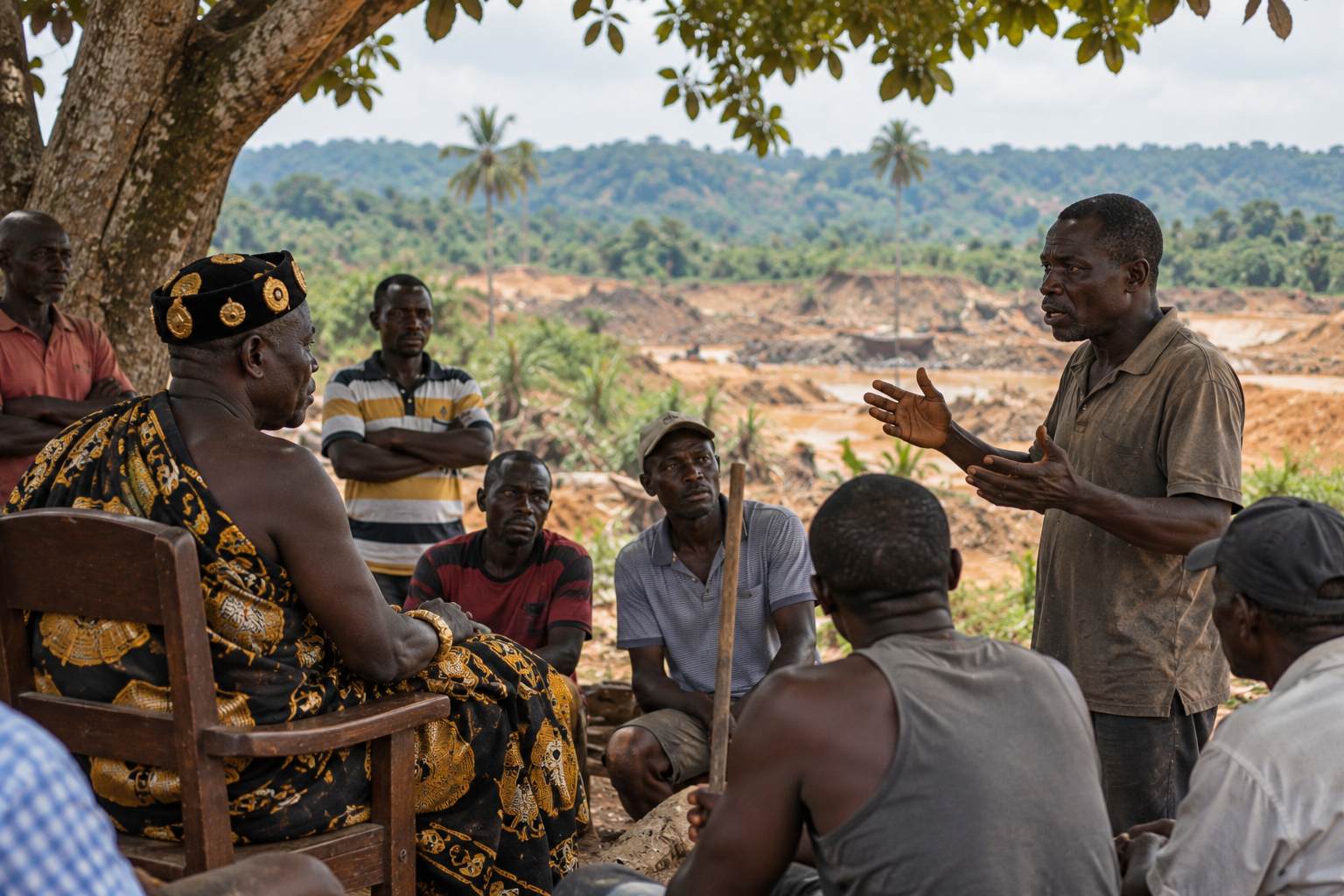
Land ownership in many Ghanaian communities involves traditional authorities, extended families and customary arrangements.
A chief may have responsibilities involving communal land, but individual families can hold established rights to cultivate particular fields. Mining becomes contentious when decisions about those fields are made without consulting the people who depend on them.
Financial compensation can create further disagreements. A landowner may accept payment from a mining company, leaving a tenant farmer without the land needed to earn a living.
Negotiations become especially difficult when families disagree over who is entitled to receive compensation or when influential individuals control access to mining opportunities.
The Ministry of Lands and Natural Resources began consultations with traditional authorities in 2025 as part of proposed mining law reforms. Chiefs pressed for greater participation in decisions affecting customary land.
Mining disputes can damage relationships within villages long after a company has finished extracting gold. Relatives may disagree over land sales, and residents who lose farms may blame the people who authorized mining.
Equipment and Machinery Used in Small-Scale Gold Mining
Small-scale gold mining in Ghana once relied heavily on hand digging and washing gold-bearing sediments. Modern mining operations now use excavators, water pumps and processing equipment to handle larger quantities of material with fewer manual workers.
Excavators remove soil and expose mineral deposits, while water pumps help move water to washing and processing areas. Trucks transport machinery, fuel and other supplies between mining sites and nearby settlements.
Equipment maintenance is another part of running a mining operation. Vehicles operating on rough terrain need regular servicing, and businesses can obtain replacement components through local distributors or an international genuine parts supplier such as STS-Global.
Access to suitable machinery has also allowed smaller mining businesses to increase their production capacity. The scale of each operation depends on available financing, equipment, workers and access to licensed mining land.
Gold Mining Is Changing Traditions
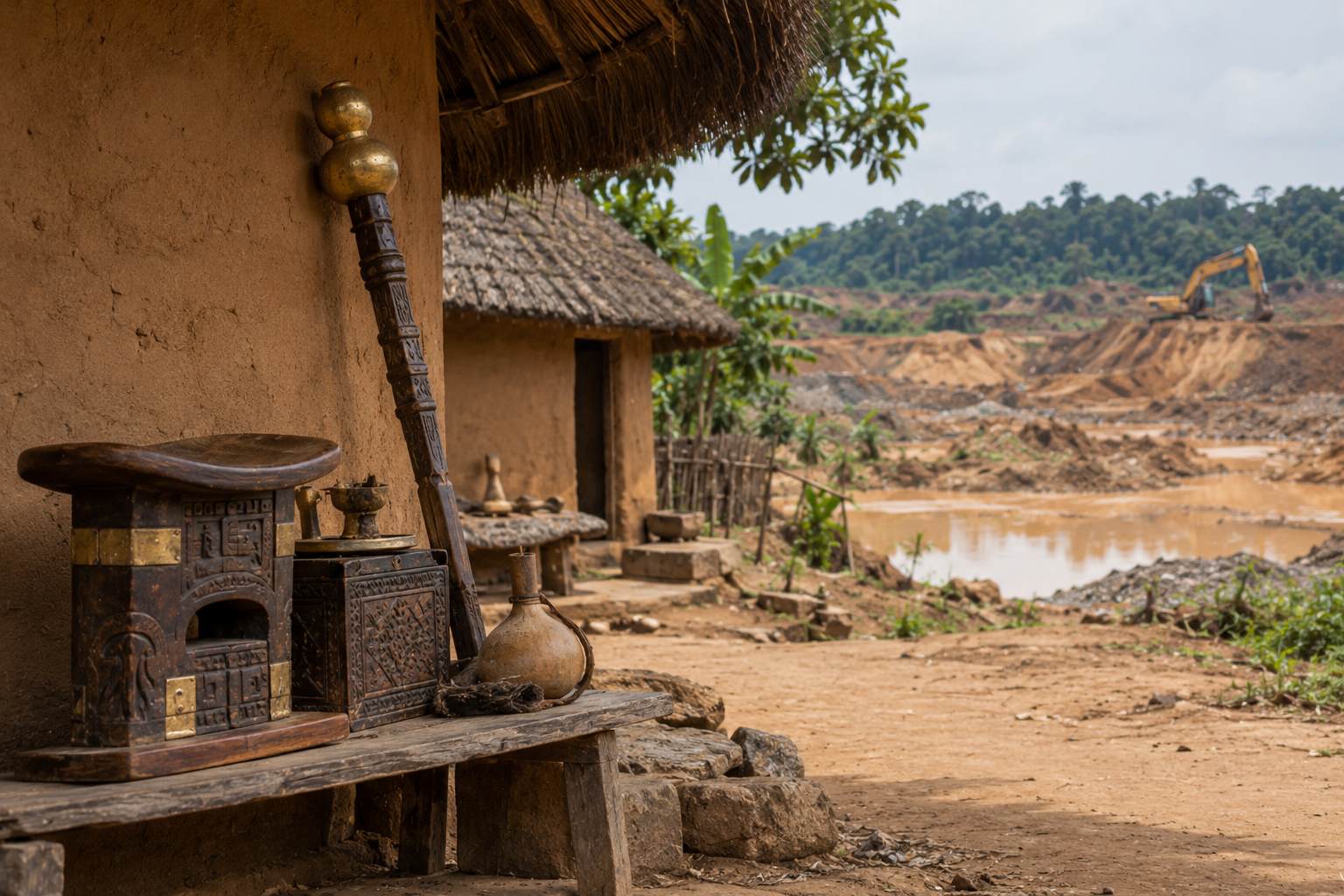
Gold trading helped finance powerful states, including the Asante Kingdom, and skilled craftspeople produced ornaments used during important political and cultural ceremonies.
It remains associated with authority and heritage in many Ghanaian traditions. Modern mining, however, is changing communities where ancient African traditions continue to influence family life and cultural identity.
In villages where families have cultivated land for generations, farms carry personal and cultural significance. They may represent an inheritance passed from grandparents to children, rather than property intended for immediate sale.
When a family gives up agricultural land for mining, younger generations may lose the opportunity to continue farming the same fields.
Mining income can also influence ceremonies, marriages and household responsibilities. Workers who earn money from gold may contribute to family celebrations or support relatives, while those who lose their farms may become financially dependent on other household members.
The changes are particularly visible when young adults leave agriculture for mining. Older farmers may want to preserve family plantations, while younger relatives see gold extraction as a chance to earn money without waiting for a harvest.
Gold Revenue Is Not Reaching Every Community Equally
Ghana earned $20.97 billion from gold exports in 2025, according to central bank data cited in the annual mining industry results.
Gold has long been central to Ghana’s economic identity, but the country’s history and cultural significance extend well beyond its mineral wealth.
The industry also generates government revenue and payments to local suppliers. Mining employment extends into transportation, equipment maintenance and related services.
Yet national earnings do not mean that every village near a mine receives substantial financial benefits.
Some residents obtain direct mining jobs, while others work in businesses supported by local spending. Farmers who lose land may receive compensation but no lasting employment.
The location of mining revenue is another concern. Gold sold through commercial buyers may generate profits far from the communities where extraction occurs.
Residents have therefore called for investment in roads, schools, healthcare and safe drinking water. Community development funding can finance local improvements, but disagreements arise when people believe the benefits are distributed unfairly.
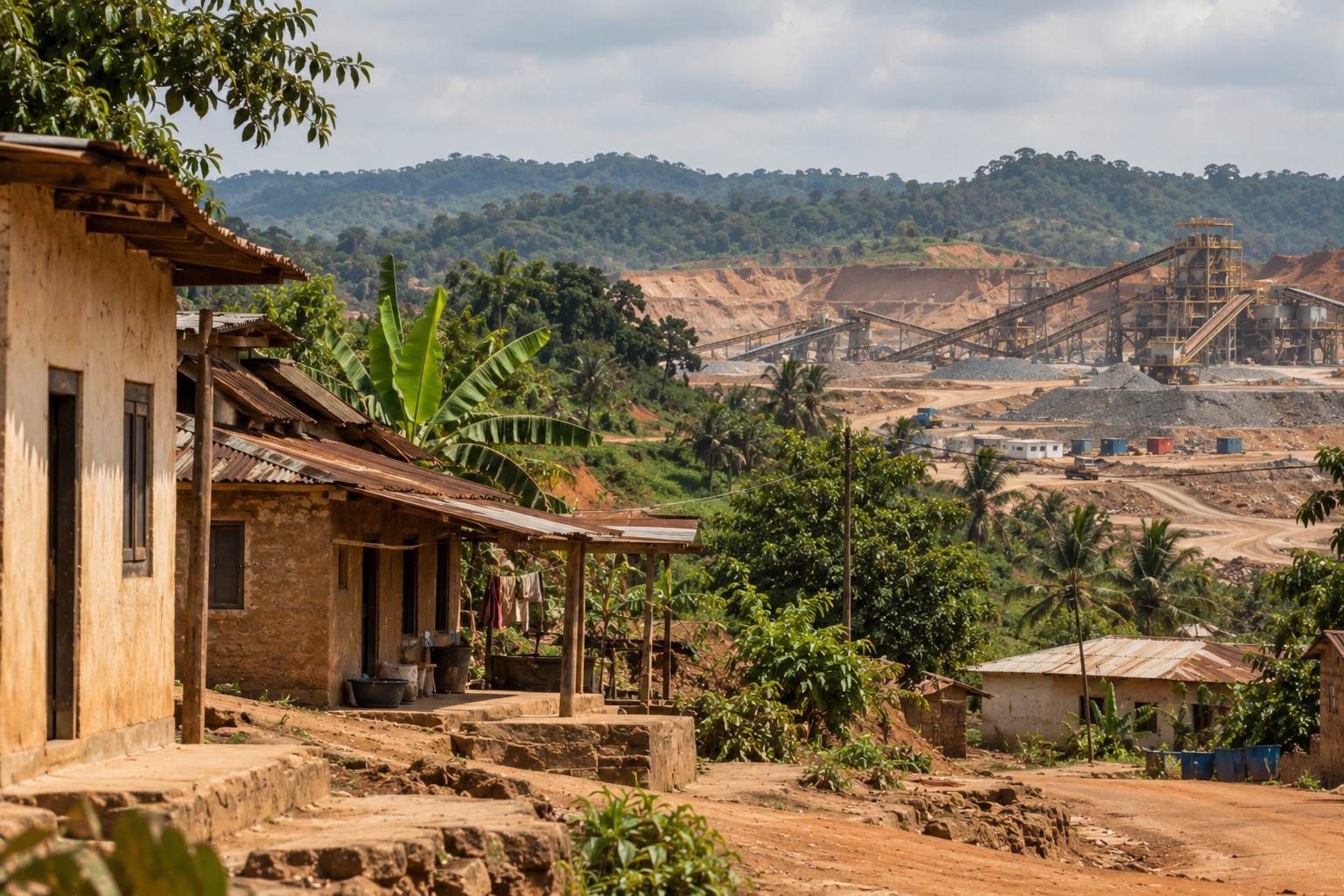
Restoring Damaged Land Will Take Years
Closing an illegal mining site is only the beginning of restoring the land.
Abandoned pits must be made safe, contaminated material may need treatment, and exposed soil requires stabilization before vegetation can recover.
Former cocoa plantations present a particularly difficult challenge. Removing the fertile topsoil can leave land unsuitable for immediate agricultural use.
Ghana’s environmental assessment of small-scale mining identifies land degradation, damaged waterways and mercury contamination among the major problems requiring stronger regulation and rehabilitation.
Restoration projects need funding after mining has stopped. Without clear responsibility for rehabilitation, damaged land can remain abandoned even when the gold has been exhausted.
For farming communities, recovery means more than planting trees. Residents need productive soil, access to clean water and safe land for future agricultural use.
Final Thoughts
Gold has created opportunities for families who struggled to earn enough from agriculture. With small-scale miners now producing more than half of Ghana’s gold, the industry has become an important source of income for rural workers.
But residents living near mining sites are also paying through lost farmland, expensive water supplies and disputes over land rights.
In Ayensuadze, the effect can be measured in the time a schoolgirl spends fetching water. Near Tarkwa, pollution became serious enough to interrupt a major treatment facility. In Jema, residents organized their own patrols to confront illegal mining.
Authorities face the difficult work of protecting licensed mining jobs while stopping destructive operations. For affected communities, progress will be visible when rivers remain usable, damaged land is restored and families can earn a living without sacrificing the resources their children will need.