

I’ve been to Egypt several times, soaking up the sights in Cairo, Giza, Luxor, and Aswan. Let me tell you straight up: this remarkable country is full of jaw-dropping views, welcoming people, and a sense of history that’ll leave you speechless.
But with all that foot traffic from international visitors, there are a few sneaky scams that pop up now and then.
I’ve been caught in a couple of them myself, so I want to share my personal experiences and tips to help you keep your trip hassle-free. Below, you’ll see the most frequent tricks travelers face—plus how to dodge them.
Transportation Traps

The moment you step out of the airport or flag down a cab in Cairo, the games can begin. I’ve had drivers invent fees, stretch routes, and pull the old “broken meter” trick—all in one trip.
Transportation scams are some of the most common in Egypt, but once you know the signs, they’re easy to avoid. My first advice is to check things online first. Also, when accessing public Wi-Fi during your travels, consider using VeePN for PC to protect your personal information.
1. Taxi Overcharging
Let’s be honest: cabs can be your best buddy or your biggest headache. I remember landing in Cairo late at night once, feeling exhausted.
The minute I stepped out of the airport, I got swarmed by drivers offering “special” prices, supposedly cheaper than the meter rate.
One guy tried charging me an “airport entrance fee” for the ride back to my hotel. I’d never heard of that in all my travels there!
How to Sidestep This Problem
- Use ride-hailing apps: Apps like Uber or Careem have been a lifesaver for me. You see the price upfront, there’s no haggling, and it’s usually cheaper than street taxis.
- Agree on the fare if no meter: In older taxis, the meter might be “broken,” so fix a price before you start moving. I always carry small bills so the driver can’t claim he doesn’t have change.
- Book official airport shuttles: If you’re a planner, it can be smart to arrange a transfer through your hotel. That way, you know you won’t be scammed the second you land.
2. Drivers Taking Longer Routes
Some cabbies drag out your journey to rack up the meter—or just to ask for more at the end.
Once in Giza, I jumped into a taxi only to realize he was driving in circles around the pyramids, probably hoping I wouldn’t notice. I told him politely that I recognized the area, and he quickly got back on track.
What I Do Now
- Track on your phone: Open Google Maps (download offline maps beforehand) to follow the route. Drivers usually get the hint you’re paying attention.
- Speak up early: If it feels like you’re taking an odd path, say something right away. A straightforward “We’re going the wrong way” can set things straight.
3. “Price per Person” Trick
You might settle on a fare, only to have the driver announce that it’s per person, not per ride, once you arrive. Heard that line too many times to count.
Stay clear
- Make it crystal clear—“This price is for all of us”—before you even get in.
- If they try it on you at the end, stick to what you agreed upon. Don’t cave. Be polite but firm.
Fake Guides and Shady Tours

Not every “guide” is legit. I’ve crossed paths with a few smooth talkers who seemed helpful at first, only to spring surprise fees or deliver a bare-minimum tour.
It’s easy to get swept up in the moment, especially when you’re excited to explore—but a little caution can save you a lot of hassle. Tourist traps are a common thing, weather if you are in North, South, or West Africa.
1. The Unofficial “Tour Guide”
At sites like the Pyramids of Giza or the temples in Luxor, you’ll often find enthusiastic locals promising the “best tour of your life.”
The pitch might be delivered in perfect English (or another language), but after the tour, they might charge four or five times what was mentioned initially.
How I’ve Handled It
- Book through verified channels: I usually go through my hotel or well-known travel agencies. Or I verify online reviews before locking anything in.
- Check for a license: Legit guides in Egypt carry official tourism badges. If you don’t see one, something’s off.
- A firm “La shukran” (no, thanks): When approached by strangers offering guidance, I’ve learned that a simple “La shukran” goes a long way.
2. Misleading Tour Itineraries
I once thought I was booking a package to see multiple tombs in the Valley of the Kings but ended up at fewer spots than promised.
Later, I discovered the operator had changed the schedule without telling me, likely to cut costs on entry tickets.
Best Practices
- Confirm in writing: If you’re booking a tour, ask for the complete itinerary in an email. This ensures you have a record.
- Read reviews: Websites like TripAdvisor are handy. If many reviews warn about “missing stops,” that’s a big red flag.
- Hold them accountable: If they skip a place, speak up. Some guides will claim it’s “closed,” but often, they just didn’t feel like making the trip.
Haggling and Scams in the Bazaars

1. Overpriced Items
Egypt has some iconic markets—like Khan El Khalili in Cairo—where you can find gorgeous lamps, spices, papyrus art, and more. But some vendors hike prices astronomically, especially if they spot a bright-eyed tourist.
My Top Haggling Tips
- Start at half: If they quote 100 Egyptian pounds, I often start with 50 or even less. It might feel weird at first, but that’s the local game.
- Be ready to walk away: Vendors usually call you back with a lower price when you step out of the store.
- Shop where locals do: If you have an Egyptian friend or tour guide you trust, go where they go. Prices are usually fairer.
2. Fake Goods
Fake papyrus is all over the place, with some shops selling cheap banana-leaf prints at the price of authentic papyrus. Counterfeit “antiques” or “handmade” rugs pop up, too, which are anything but legit.
Safeguards
- Go to certified papyrus institutes: These spots have demonstration rooms showing you the papyrus-making process. It’s fascinating, and you’re more likely to get the real deal.
- Ask for authenticity proof: Reputable sellers might provide a small certificate or at least a reputable receipt.
- Pay attention to the item’s feel and texture: Real papyrus tends to have a thicker, more layered texture compared to flimsy fakes.
3. Hidden Fees and “Service Charges”
A few cafes or restaurants might tack on extra charges to your bill, expecting you not to notice.
Once, in downtown Cairo, a restaurant added a mysterious “tourist tax.” I asked for an itemized receipt, and poof—the extra cost disappeared. Don’t get caught:
- Ask for a full breakdown of the bill: If something looks odd, question it.
- Watch out for freebies: Some places offer “free tea” or “free bread” and later charge for it. Ask ahead if it’s truly included.
Street Scams and Baksheesh
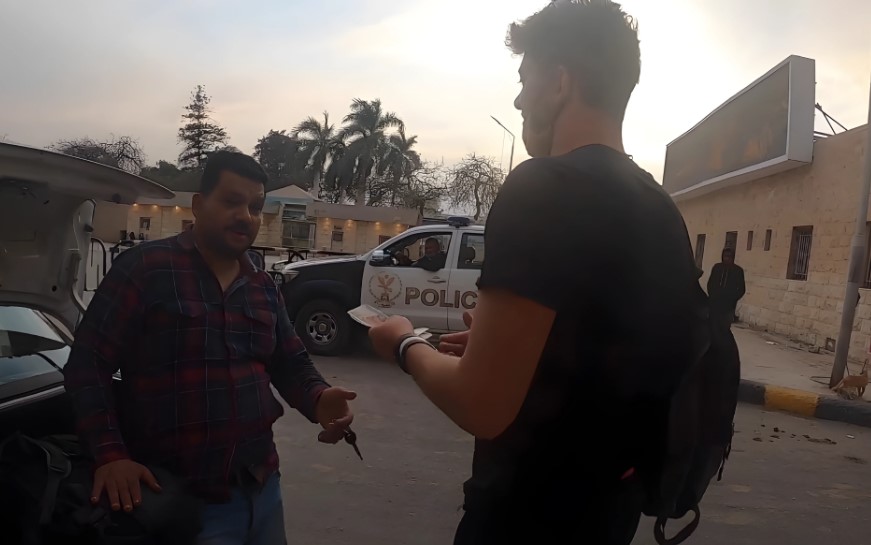
Street scams in Egypt can be some of the most unexpected—and honestly, the most frustrating—parts of your trip if you’re not ready for them. Here are the main ones you should watch out for:
1. Constant Requests for Tips
Egypt has a tipping culture known as baksheesh. It’s common to give a small tip in gratitude for good service.
However, I’ve encountered people demanding tips for just pointing me toward the restroom or snapping a quick photo.
My Approach
- Tip based on effort: I might give a few coins if someone genuinely helps me carry my luggage or goes out of their way to guide me. But not for trivial gestures.
- Stand your ground: A polite but firm “La shukran” usually works if they haven’t actually done anything.
- Carry small bills: If I do decide to tip, I don’t want to fumble around for a large note, giving them the chance to say “no change” and keep the difference.
2. Emotional Beggars
It breaks my heart, but some people spin stories about sick relatives or being unable to afford medicine. More than once, I’ve been approached by a person in tears, only to see them trying the exact same pitch on another tourist moments later.
How to Handle It
- Small donation if you choose: If someone seems genuine, I might offer a bit of spare change. But I’m cautious because some are professional beggars.
- Don’t engage too long: If you sense something’s off, politely move on. Lingering often attracts more people with the same approach.
3. Overly “Helpful” Strangers
Occasionally, you’ll meet someone who starts walking alongside you, giving unsolicited info about the sights or offering to show you a hidden local gem. By the end, they’ll demand a tip for their “tour.”
Stay Alert
- Say no from the start: If you don’t want this service, politely cut it off early.
- If you accept help, clarify: “Thank you, but I don’t have money to give,” or set a small tip amount upfront if you truly need guidance.
Accommodation Issues

Accommodation—the one thing you really want to go smoothly after a long day of temple-hopping or desert trekking.
But just like anywhere with heavy tourism, Egypt has its share of hotel hiccups.
1. Bait and Switch on Rooms
A friend and I once booked a room at a gorgeous Nile-facing hotel, only to arrive and find we’d been placed in a windowless space at the back. The hotel claimed there was a “maintenance issue” with the original room, which was questionable at best.
Ways to Avoid This
- Get confirmation in writing: An email or screenshot showing your reservation details is golden.
- Check the room immediately: If it’s not what you paid for, calmly show them your proof. Most hotels resolve it quickly if you stand your ground.
- Book directly with the hotel: This reduces any confusion that might arise through third-party booking sites, though I’ve used online travel sites successfully many times.
2. Mandatory “Extra Charges”
Some places tack on weird cleaning fees or “linen charges” if they believe you won’t fight back. I had a budget hotel in Aswan once try to slip in a “viewing fee” for letting me look at the rooftop. Ridiculous, right? Dodge these sneaky tactics:
- Ask about all fees upfront: Before checking in, confirm there are no surprise add-ons.
- Use credible booking platforms: Reputable sites typically include all mandatory charges in the total.
- Call them out: Polite confrontation often solves the issue.
General Safety Pointers
View this post on Instagram
Below are a few broader tips I’ve picked up:
1. Keep Valuables Hidden
Crowded markets or busy buses are prime spots for pickpockets. I store my passport in the hotel safe and carry only photocopies. That little step helps me relax while roaming.
2. Use Headphones as a Shield
Strolling around with earphones in (even if music’s off) can discourage random touts or scammers from approaching you. Point to your ears if they persist, or continue walking like you didn’t hear them.
Learn Basic Arabic Phrases
Knowing “Shukran” (thank you), “La shukran” (no, thank you), and “Kam?” (how much?) saves me from awkward tourist moments. Locals appreciate the effort, and it sometimes wards off scams because you appear more seasoned.
Dress Appropriately
When visiting religious sites or venturing off the main tourist track, I wear modest clothing. It shows respect and also stops shady individuals from spotting me as a naive visitor right away.
Stay Current with Tech
Travel apps help a ton. Currency converters like XE give you a quick check on fair prices, while apps like Google Translate can assist when you’re negotiating or trying to clarify a misunderstanding.
Give Baksheesh Where It’s Deserved
Tipping in Egypt is part of the culture. However, there’s a difference between rewarding good service and paying out of intimidation. A quick smile and small tip for genuinely helpful service is cool; caving to someone aggressively demanding money is not.
Summary
Egypt’s allure is undeniable. I’ve had countless magical moments exploring its ancient tombs, drifting on feluccas along the Nile, and chatting with warmhearted locals. Sure, scams exist. But a bit of vigilance goes a long way. You don’t need to turn paranoid—just keep your eyes open, use common sense, and have the confidence to say “no” when something feels off.
The real secret? Embrace the experience while protecting yourself. Keep your wits about you, bargain confidently, and choose trusted drivers and guides. Do that, and you’ll find that your time in Egypt will be full of wonder instead of worry. Safe travels, and remember: a little preparation can prevent those minor annoyances from overshadowing an otherwise incredible adventure. Enjoy every moment—pyramids, temples, Nubian villages, and everything in between.